
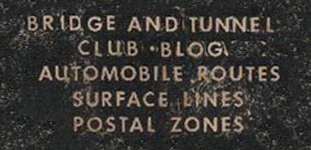
Entries from December 2004

Friday, December 31st, 2004

Red State Revolution

In honor of our visitors from the so-called “flyover states” (and because no one else is around), the Times op-ed board extols the virtues of tailgating:

The proposal for a $1.4 billion Jets football stadium on the Far West Side of Manhattan has many flaws, which we’ve enumerated on other occasions. Now the Times sports columnist Dave Anderson has added another. The new stadium would offer mostly garage parking, and would thus interfere with a pastime that a lot of fans find more enjoyable than watching the Jets themselves: tailgating.

On two recent Sundays, Mr. Anderson toured the vast concrete parking lots surrounding Giants Stadium in New Jersey’s Meadowlands, and conducted an admittedly random and unscientific poll of about 150 tailgating fans.

The results were clear: 80 fans wanted to stay where they were, 55 would attend games at a stadium on Long Island or in Queens (like Shea, where the Jets once played, and where fans could keep tailgating). Only 15 preferred a stadium in the city.

Proximity to one’s home was a factor, but the most important reason to oppose the stadium plan was the feeling that a Manhattan stadium would not just trifle with the tailgating tradition, but pretty much destroy it. The Jets, who say they have conducted polls in which the “West Side came out on top,” insist that fans will be able to gather on the streets and at local bars and restaurants.

But that’s not tailgating. Tailgating is acres of S.U.V.’s and pickups, grills and trestle tables groaning under mounds of chicken and ribs and burgers, tents to keep out the rain and the cold, and R.V.’s to house the TV for watching another game.

“Your team can’t always be great,” Mr. Anderson quoted one fan as saying, “but the tailgating is.”

Friday, December 31st, 2004

Unibrow for the Working Class

Story by story, bit by bit, those effete elitists at the Times are dismantling the myth of the working man. “Tough Guys, Shapely Eyebrows”:

In a quiet revolution sweeping the blue-collar precincts of metropolitan New York, mechanics, firemen and construction workers - most of them insistently heterosexual - are unapologetically doting on their eyebrows. Inspired by “Queer Eye for the Straight Guy” and the well-coiffed rap artists on BET, cowed by tweezers-wielding girlfriends and goaded by wisecracking co-workers, they are plucking and waxing as never before. And they don’t lie about it.

“Eyebrows were the last frontier,” said Louis DeJesus, a hair stylist whose Bronx salon, International Nails and Beauty, started seeing an influx of men about two years ago. “Everyone’s doing it now. And once a guy starts doing it, he gets addicted.”

. . .

From the immigrant enclaves of Queens to the minimalls of Long Island, modest salons that once catered to women find themselves inundated by primping, preening men, most of them young working-class guys who tend to spend their weekends at dance clubs. Even the Gotti brothers, the ones with their own reality television show, have embraced a minimalist approach to facial hair.

Carol Cedeno, a manicurist at Tom’s Scissorhands, a salon in Paterson, N.J., has seen the trend. “A lot of the guys used to be embarrassed, but now they just walk in and say it proudly: ‘I want my eyebrows done,’ ” she said, noting that her salon offers a wax job for $5. “Sometimes their eyebrows end up looking more dainty than their girlfriends’.”

When he first started tweezing last year, Al Bernal, a 31-year-old auto mechanic from Newark, said his friends called his sexuality into question. “They said I looked, you know, gay,” said Mr. Bernal, whose style is maintained by his fiancée. “Of course, these days they do it, too, and they love it because they get a lot more attention from chicks.”

Unintentionally adopting a look that got its start in gay clubs, Mr. Bernal and his friends - who once aspired to the roughneck street thug look - have also discovered the allure of the year-round tan, the shaved chest and the eye-catching clubbing outfit. Diamond studs are in. Flashy gold chains are out. Guys, without even a pause, call it “the pretty-boy look.”

Robbie Wootton, the owner of Spirit, a Chelsea nightclub that caters to the bridge-and-tunnel set on Saturday nights, says the transformation has been stunning. “Never mind the eyebrows,” he said. “These guys shave their whole bodies, even their arms. If you bump up against them in the early morning you can feel the stubble growing back. It’s like rubbing sandpaper.”

Thursday, December 30th, 2004

Best Post Headline Ever?

“‘Hookers’ Relish Wieners”:

Long Island cops have busted two women who were selling hot dogs — and themselves — from a food truck parked along a busy stretch of Sunrise Highway, authorities said.

Rose Skorge, 34, and Catherina Scalia, 38, were charged yesterday with prostitution.

According to police, Scalia and Skorge started parking in Baldwin about four months ago and sold hot dogs, chips and sodas to dozens of unsuspecting customers from the front of the truck — and sex in the back.

When they spotted a potential consumer for their other business, they would first offer to strip, and then, if the man appeared to be craving something more, take it to the next level, according to cops.

“We’ve never seen hot dogs mixed with prostitution before,” Deputy Inspector Rick Capece said. “There are so many jokes, so little time.”

Acting on a tip, a police officer visited the truck and was propositioned, cops said.

Capece said that Scalia offered to reveal a part of her body for $50. When the officer declined, Scalia allegedly said that Skorge would perform a sex act for the same $50.

When the officer again balked, Scalia promised additional services from Skorge for the same $50, cops said.

In the back of the truck was a captain’s chair and a couch, where Capece said the sex acts would take place.

And they weren’t even tidy about their legitimate business — open bags of chips were scattered around. “It’s certainly not the most sanitary hot dog truck I’ve ever seen,” he said.

Scalia, who lives in Rockville Centre, told police she’s only a stripper and that Skorge, of Merrick, was the one turning tricks in the back of the truck.

Cards for the stripper service littered the truck. On the cards, the women went by the names “Diamond” and “Roxy” and the business was called “Double Delicious,” a possible reference to their hot dog sidelight.

Thursday, December 30th, 2004

Contrite Snapple Execs Grovel; Staten Island Says “Drop Dead”

Snapple vs. Staten Island update:

Snapple executives were doing everything they could yesterday to prove they aren’t all wet when it comes to Staten Island.

The day after they removed a jab about the borough from their Web site, company officials called local politicians to apologize.

But City Councilman James Oddo (R-S.I.) still found the humor hard to swallow and wanted to make a point.

“When faced with ignorance, disrespect or worse, you need to stand up to it and call it out,” Oddo said before he and state Sen. Diane Savino (D-Brooklyn, S.I.) poured a bottle of Snapple Iced Tea down a sewer drain in Grant City.

Right down the sewer — where it belongs!

Thursday, December 30th, 2004

That Special Time of Year

While it’s true that the Carnegie Deli has a line out the door stretching halfway down the block and you can’t walk down Seventh Avenue without being asked where Times Square is (”That’s it right there.” “But where’s the square!?”), the rest of the city is deserted:

For those worried about getting around town, please do not be alarmed to find an empty seat on the subway, even at rush hour. Nothing is wrong. It is not a prank.

Then again, don’t even bother trying to find a seat in a horse-drawn cab near Central Park for a romantic winter-wonderland ride. Every out-of-towner has the same idea.

It should come as no big shock, of course, that New York often takes on a different personality during certain holidays. There are more tourists and fewer natives. Businesses change their hours, their décor, even their attitudes to match the conditions.

But this year, it seems, New York has become even more a best-of-times, worst-of-times kind of place, depending on geography and other factors. Or so said dozens of New Yorkers and tourists in conversations this week, who have noticed that some places seem more jam-packed than ever, while others are deserted.

I have to say that although it’s obviously bad for business, we enjoy having a bar or restaurant to ourselves. Even the normally hard-to-get-into places are empty:

Even some famous establishments, ordinarily packed, have had surprising lulls. On Sunday night, for instance, Lisa Magnino and her boyfriend, Jon Coifman, decided to see how long the line was at Grimaldi’s pizzeria in Brooklyn. There wasn’t one.

“We were like, hmm, it must be closed,” said Ms. Magnino, who lives in Carroll Gardens. “But it wasn’t, and when we walked in, we were seated right away. There was a couple sitting at a table for four, and they said, ‘Can you believe this?’”

Thursday, December 30th, 2004

Dropping Balls

Once again, we will miss the New Year’s Eve festivities in Times Square — there’s absolutely nothing — nothing! — appealing about waiting seven hours in the cold without access to even a porta-potty much less alcohol! In lieu of that unfulfilled experience, there’s this helpful Times op-ed about the history of balls dropping. Fascinating stuff:

New York City’s annual ball drop is probably the greatest single moment of public timekeeping in the world. Yet the Times Square ball is not the world’s most important time ball - nor was it the first. It wasn’t even the first time ball in New York. Oh, and it isn’t even dropped right.

A little history first. Public time-telling began in church. In 1335, the bells of the church of San Gottardo (then Beata Vergine) began tolling the hours in Milan, ringing once at 1 a.m. and culminating in 24 chimes at midnight. It was the first time church bells had been used to announce time regularly. The idea spread rapidly through Europe, and for the first time in history, large groups of people knew the time. The Milan clock could be off by as much as 1,000 seconds a day, but that wasn’t really a problem, because if nobody knew exactly what time it was, how could anyone really be late?

Measurement of time improved as the centuries passed, but even into the early 18th century most people had no need for precise time. (The minute hand shows up on watches, for example, around 1700). The bells tolled hourly and that was plenty.

Accuracy improved vastly during the industrial revolution and was honed at sea: ship captains needed extremely precise clocks to coordinate their celestial readings with the time those readings would occur at a known point - usually Greenwich, England (the city that later lent its name to Greenwich Mean Time, the world’s standard time). John Harrison, the famous clockmaker, developed a chronometer accurate and portable enough to do the job in 1761, and ultimately changed the world.

But once clocks were capable of precision time-telling, the question was, what to set them against? In the early 19th century, enter the time ball. Robert Wauchope, a Royal Navy captain, had an idea: a large signal in a harbor would, at a specific moment, indicate the exact time - sailors could view it through a telescope and set their chronometers precisely.

In 1829 the Admiralty gave it a shot, setting up the world’s first time ball in the harbor at Portsmouth, England. It worked so well that in 1833 they set one up at the Royal Observatory in Flamsteed House, on a Greenwich hilltop. The ball, which was visible to ships at anchor, would be dropped every day at 1 p.m. At 12:55 p.m., the red, wood-and-leather ball was raised halfway up a 15-foot mast atop the building; at 12:58 it went to the top; and on the hour the ball began to drop, the start of its downward motion signaling exactly 1 p.m.

The ball idea caught on. The United States Naval Observatory began dropping a noon time ball in Foggy Bottom in 1845 and kept it up until 1885, when the ball drop moved to the State, War and Navy Building (now the Eisenhower Executive Office Building) next to the White House, where it kept dropping until 1936. Starting in 1877, the Navy telegraphed a daily signal to the Western Union Building in New York, atop which an automatic time ball then dropped. (Twelve minutes early, to account for the difference in longitude; we didn’t get time zones until the telegraph and railroads made them necessary, in the 1880s.)

Which brings us to the famous Times Square ball:

And as for New York, in December of 1904, this newspaper celebrated the move to its new Times Square building with a New Year’s Eve party, which thereafter grew year by year. When, in 1907, a ban on fireworks prompted The Times to find a new celebration finale, a time ball was brought in, and the tradition began.

The Times Square ball isn’t quite a true time ball. The eye can easily pick up motion, so precise time balls mark time by starting to move, not by stopping. The Times Square ball marks time with the end of its motion - hard to perceive and inexact, but presumably more fun for counting backward.

Wednesday, December 29th, 2004

Not Funny

As Staten Island boosters, we’re not amused, either. “Snapple raises stink with S.I. ‘joke’”:

Snapple, the unofficial drink of New York City, may need a lesson in good humor - not to mention good taste.
On its Web site, company officials had the gall to poke fun at Staten Island - then hurriedly pulled the punch line when contacted by the Daily News.

In explaining how to play Snapple’s “Real Facts Game,” a fill-in-the-blank question asked, “The most recognized smell in the world is —–?”

Then came the company’s insulting answer: “No, it’s not Staten Island. It’s coffee.”

Prominent Staten Islanders, among them City Councilman James Oddo, are outraged at the perfidy, comparing the company to our most perfidious allies:

“This from a company allegedly teaming with New York to market the city,” said an incredulous Oddo. “That is one hell of a partner we have. Normally one has to be dealing with France to be treated so badly by a ‘friend.’”

Bonus Point: Snopes’ Snapple Dragoon (addresses those false rumors about Snapple supporting far-right wing causes).

Wednesday, December 29th, 2004

Jerry Orbach

Sad news about Law & Order star Jerry Orbach, who has passed away at the age of 69.

As Detective Lennie Briscoe, his glib gruffness was a treat — those glorious one-liners that preceded the opening credits each week never failed to make us smile.

See also: New York Times Jerry Orbach obituary

Tuesday, December 28th, 2004

Kennedy Fried Chicken

The pseudo-chain Kennedy Fried Chicken has always piqued my interest. Happily, Satan’s Laundromat has put together a photo tour of Kennedy Fried Chicken establishments throughout the Northeast. Huzzah!

Bonus Points: reprint of “Chicken Little” (New York Times, August 15, 2004).

Tuesday, December 28th, 2004

The Christmas Bonus

Another old-news kind of story, but helpful nonetheless in sketching out just who the fuck these people are. “That Line at the Ferrari Dealer? It’s Bonus Season on Wall Street”:

Samantha Kleier Forbes, a 30-year-old real estate broker, was getting ready to leave for a vacation to Florida with her mother and sister when she got an urgent call. It was a client who had spent the summer scouring the Upper East Side of Manhattan for an apartment priced between $4 million and $5 million.

The client insisted on seeing more apartments that day, but now she wanted to look in the $6 million range. Her husband, a banker at Goldman Sachs in his late 30’s, had just received his year-end bonus.

“Normally this time of year is dead,” said Ms. Forbes, a vice president at Gumley Haft Kleier, a residential real estate brokerage. But this winter there is unusual buying interest that she attributes to rich Wall Street bonuses. She is cutting her end-of-the-year vacation short, so she can prepare for an onslaught of clients eager to see apartments.

Recipients of such year-end bonuses seem quick to downplay their significance, but who are they really kidding?

This year’s bonuses do not quite reach the heights touched by star bankers and traders in the heyday of the late 1990’s technology bubble. But they are rich enough to persuade many of Wall Street’s elite to rediscover conspicuous consumption.

One senior trader is building a sports complex for triathlon training at his house in upstate New York. It will include a swim-in-place lap pool, a climbing wall and a fitness center. Another bought an Aston Martin. For some, upgrading real estate is the first order of business.

But many Wall Street professionals are urging caution, given that the bonus typically constitutes the majority of their compensation. More than a dozen bankers, all of whom would talk about their spending only on the condition of anonymity, said they were all too aware that the good times could end as quickly as they did after 2000, when a $2.5 million income could turn to $800,000 overnight.

“Given the last two to three years when people figured out that this business is pretty volatile, they are going to try and bank a lot of their bonuses,” said one managing director at a firm where bonuses have been announced. “They’ve seen too many people laid off and they realize they can’t just spend all their money.”

It should be noted that this same banker just bought a $150,000 Aston Martin to park in his garage in Greenwich, Conn.

It’s not all about multi-million-dollar apartments and cars. There are boobies, too:

“Certainly the Wall Street crowd is very special to us,” said Lonnie Hanover, a representative for Scores, a high-end strip club in Manhattan. “December is an amazing month for our business, but it’s everything, it’s Christmas bonuses, Christmas spirit. They have their official parties and then the unofficial party here.”

Bonus Points: “Got Bonus Envy?” (New York Observer, December 25, 2000); “Wall Street’s Bonus Babies,” Jim Hightower (April 26, 2000); The Dils’ Trouser Press entry.

Tuesday, December 28th, 2004

New York City Walk

Big props to Caleb Smith, who has walked every street in Manhattan:

Last summer, Caleb Smith, a thirty-four-year-old librarian at Columbia, came across an old Times story with the headline “NAVY OFFICER NEAR THE END OF 4-YEAR PROJECT OF WALKING IN EVERY STREET ON MANHATTAN.” The article, from December, 1954, was about an eccentric sixty-five-year-old named Thomas J. Keane, who, in the course of taking carefully planned weekend strolls, had managed to traverse some three thousand blocks and five hundred miles of Manhattan terrain. Smith, himself an inveterate walker, was then a little more than two years into his own all-encompassing Manhattan project—and, he estimated, about three-quarters of the way done. Why not pick up the pace and aim at finishing on the fiftieth anniversary of his predecessor’s achievement?

As big fans of such ambitious projects, this one is well worth noting.

See the website, New York City Walk.

Tuesday, December 28th, 2004

The New Carhartt Guy

It’s official — The Christmas Tree Man is the New Carhartt Guy:

Once a year, something magical happens in New York. The metrosexuals, the unemployed artists and the unattainable are brushed aside. For five short weeks, the real men are in town. The Christmas Tree Men. They hail from Montreal, upstate New York and even Brooklyn. They are rugged and good-looking, and if you hurry, you might still find one packing up the remains of the holiday.

Some women like them because they are reliable. “He is there when I leave for work and when I get home at night,” Sara Booth, a filmmaker, said of the blue-eyed Canadian she often saw on her way to the A train from her Washington Heights apartment. “I don’t always know where my boyfriend is, but I always know where he is.”

Lindsey Schaeffer, a teacher who lives in the East Village, found them a pleasant break from the pressures of the usual dating scene. “They see me in sweat pants going to the gym,” she said, “and they still smile at me.”

They are almost too good to be true. “Not only is he nice, burly eye candy, but I know he has a job,” said Lisa Green, a graphic designer. For a holiday fling, you can’t ask for more.

Approaching a Christmas Tree Man is easy. Bring an offering - coffee or a slice of pizza will do. Remember, they are cold, hungry and would probably love to take a shower in your apartment. (After all, these are guys often known for sleeping in their cars.)

Of course, Jen notes that this story is old news: “Who among us hasn’t swapped spit with a Christmas Tree Guy?” Who among us, indeed!

See also: Carhartt Guy, as per Sunday Styles.

The Real Men are in Town:

Broadway and 145th Street, December 21, 2004

Monday, December 27th, 2004

Dear Diary

I can’t tell if today’s Metropolitan Diary is obnoxiously condescending or just obnoxious. Please someone help:

WAITRESSES
(a poem about working on the Lower East Side)

We work the late nights
in the blurred sight
of the drunks who drink in dim lights.
We share cab rides
in the sunrise.
We sit laughing at the stop signs.
We work the weekends.
We are a few friends.
We make the best of such a dead end.

I mean, I think I can visualize who could be writing this — somebody for whom waitressing is a stop-gap job in lieu of other interests — but on the off chance it isn’t, doesn’t it sound horribly obnoxious? Answer: Yes!

Also from today:

  • Just Keep Telling Yourself That: Lo and behold, the high-rise tower that had sprung up a block north was reflecting the sun’s glorious afternoon rays into our humble one-bedroom, an unexpected benefit of gentrification.
  • If I Had a Dime for Every Time . . .: My sister and I stared at each other dumbfounded as our heap of burdensome baggage at the top of the stairs was quickly transformed into a wonderful New York story at the bottom.
  • The Happy Proletariat: The truck driver got out, tipped his hat to my aunt (who conceded defeat very graciously) and we proceeded on to the museum for a great afternoon.

Bonus Point: Better (and More Frequent) Metropolitan Diary.

Monday, December 27th, 2004

“Nature Must Not Win the Game”

The Times, doing a fancy-pants version of that Jay Leno “Jay Walking” thing, asks subway riders what the cryptic quotes in the subway station under Bryant Park mean. Hilarity ensues:

In the subway there is a riddle disguised as a declaration. It is engraved in gray stone on a wall of the station at 42nd Street and Avenue of the Americas, atop a staircase to the platform where the B, the D, the F and the V rumble by.

“Nature must not win the game,” the inscription reads, “but she cannot lose.” Each day the words float briefly before thousands of eyes. A few riders pause to ponder them as they go on their way, perhaps seeking a clue in the backdrop, a mosaic of what look like berry-bearing vines creeping through and eating away at the gray stone.

The simple-sounding sentence, the inscription says, was written by Carl G. Jung, the psychologist and mythographer. What does it signify? And what is it doing in the subway?

Who knows? Not Joe Noto.

“Honestly, I couldn’t tell you what it means,” Mr. Noto, an electrician on his way home to Dyker Heights, Brooklyn, said the other day. Many other riders refused even to entertain the question.

Of course, this is New York, so no Jay Walking here:

But two recent afternoons spent conducting a semi-random survey turned up a fair share of subterranean philosophers intrigued by the cryptic pronouncement, which has been on the wall since 2002. Was it meant as a reassurance or a warning? Is it a good thing if nature wins, or a bad thing?

A police officer patrolling the station, Officer Russell King of Transit District 1, which includes the 42nd Street station, has worked enough slow shifts to have had time to chew over Jung’s words. “It seems like he’s an urbanite,” Officer King said. “It seems like we as a people in this city have to overcome everything to live.” But, he added, there’s a twist: we are part of nature, so if we defeat nature, we defeat ourselves. “It’s like a double negative, a Catch-22,” he said. “If we win, we lose.” Officer King’s partner on patrol, Wayne Steele, picked up the riff. “No matter what,” said Officer Steele, a beefy man with a prominent mustache, “nature’s going to win.”

Some people tried to break the sentence into its parts.

“‘Nature must not win,’” repeated an unassuming man in a blue-and-red windbreaker, who said he was a designer of women’s accessories and volunteered only his first name, Emilio, and his home country, Ecuador. “So man - man could win?” Emilio asked. “I think nature is bigger than man. At first glance, it makes me think two things. One is the grabs for a global empire - the power of the big corporations trying to run the world.”

A southbound F train pulled in and Emilio got on. “But beyond the greed itself,” he continued, “unless the people can make decisions in the world, it’s much easier to do just a few people’s interests.”

The train stopped at 34th Street. Emilio got out. “Nature,” he said. “Who controls nature? Nature is God. It’s the fight between the power of man’s greed and the power of God. And when it comes to reality, it doesn’t matter how much money you have, you can’t control the world.” He disappeared through the turnstiles.

But just so you know, some riders — not unsmart ones, we! — told the Times that the installation just makes them feel stupid:

“I don’t like it,” said Martin Bernier, a transplanted Parisian who owns a wholesale bakery in Queens. “I don’t think it’s appropriate for people to see in the subway. Why do they put this here? Who is Carl Gustav Jung? I know who he is now because I made a small investigation. But it makes me feel ignorant.”

Mr. Bernier pointed out that the Jung installation was part of a much larger piece that proceeds down the long corridor to the Fifth Avenue exit and includes quotations from Ovid, the nursery rhyme “Jack and Jill,” and an obscure passage from “Finnegan’s Wake,” each being invaded from above by mosaics of golden tree roots and from below by mosaics of bedrock.

Sipping quickly from his coffee cup, Mr. Bernier, 52, led a reporter down the corridor. “Look at this,” he said. “James Joyce. He’s Irish, right?” The decay hinted at in the mosaics, Mr. Bernier said, assaulted the eye.

“I’m glad to talk about this,” Mr. Bernier confided, “because I was very disturbed by this corridor. I have an average education, and I feel frustrated. It made me feel like an idiot.”

Finally, for the record, an expert’s opinion:

Meredith Sabini, a Jungian psychologist who recently compiled a book of Jung’s writings on nature, “The Earth Has a Soul,” said the quotation referred to a struggle between the conscious and the unconscious, or “natural,” mind.

“Jung is saying we’re not supposed to follow instinct blindly,” Ms. Sabini said in a telephone interview from her office in California. “We’re supposed to have consciousness. But that doesn’t mean you’re supposed to kill nature. Because the unconscious is wisdom that has grown over the millions of years we have been Homo sapiens.”

The full quotation, from Jung’s “Alchemical Studies,” says: “Nature must not win the game, but she cannot lose. And whenever the conscious mind clings to hard and fast concepts and gets caught in its own rules and regulations - as is unavoidable and of the essence of civilized consciousness - nature pops up with her inescapable demands.”

Bonus Point: MTA’s Arts for Transit Pages (curiously, no “Under Bryant Park”).

Thursday, December 23rd, 2004

Pickpockets

Since it’s that the time of season, the Daily News has a helpful piece on pickpockets in today’s paper. Nothing groundbreaking, but it discusses the exotic-sounding School of Seven Bells, one of those Boo Radley-esque concepts that may or may not be an urban myth but is worth recounting (once again):

The worst of them are so slick that some cops believe they were trained at a legendary crime college in South America - the School of the Seven Bells.

The school, said to be in Colombia, has never been visited by a U.S. law enforcement official, and many believe it does not exist.

But as the legend goes, the final test at the school involves a teacher posing as a mark, his body booby-trapped with seven small bells, each strategically placed. To graduate, students must slip valuables from several pockets without ringing any of the bells.

Remember “School of the Seven Bells” for later use (lyrical, that!).

They also have a great glossary of “pickpocketing lingo”:

  • The Pick - Snatching a valuable item from a person.
  • The Dip - The thief who actually executes the pick.
  • The Mark - The victim.
  • Ripper - A fearless thief who brazenly rips or cuts items out of a pocket and runs.
  • The Dish - A handoff. The thief who swiped the wallet gives it to another thief lurking nearby to prevent being caught.
  • The Stall - A thief blocks the path of a walking target to allow a pickpocket to swoop in.
  • Looping - Repeatedly passing a target or a store in order to steal something.

And don’t forget the colorfully named scams:

  • The Squirt Job: A thief squirts a condiment like ketchup or mayonnaise on a victim’s jacket. The thief then points it out, or his partner points it out. While the victim wipes off the stain, the thief picks the pocket or bag.
  • The Money Drop: A thief drops cash or other items in front of the victim walking down the street. Another thief comes from behind and picks the distracted victim’s pocket or swipes his or her bag.
  • The Flat Tire: A thief looks for a driver sitting inside a car, punctures the car’s tire and then points it out. When the driver gets out of the car to inspect the tire, another thief steals valuables from the vehicle.
  • The Bump: A thief bumps into a victim on the street, in a store or in the subway, giving his accomplice time to sneak up from behind and pick the jostled victim’s pocket.

To quote Hill Street Blues‘ Phil Esterhaus, “Let’s be careful out there!”

Thursday, December 23rd, 2004

The Hip-Hop Church

Kurtis Blow is rapping for Jesus:

A pioneering rap star is taking hip-hop from the projects to the pulpit.

Kurtis Blow is one of the founders of “The Hip-Hop Church” at two Harlem parishes, which features rousing services fueled by gospel-inspired rap tunes.

“The kids need to learn about God, but even the ones who already know God don’t like the church, because church is boring,” Blow told The Post.

“What we do isn’t boring — it’s energetic, it’s uplifting, it’s spiritual — and the kids can relate to it. We speak the word of God in a language they can understand — rap.”

. . .

Below the altar, Blow mans a DJ booth, rapping and scratching along to artists including 3 Shades of Faith Introducing Prophecy; The Hip-Hop Church Band; guest rappers and break dancers.

In between the beat-driven numbers, the Revs. Stephen Pogue and Darren Ferguson lead the congregation in prayer and deliver inspiring sermons. This February, Blow, 45, will begin studying at the New York School of Ministry to become a full-fledged man of the cloth.

You may be aware that MC Hammer is already an ordained minister; Blow notes the rap-religion symbiosis:

“The younger people really love it because it’s rap, but the adults also like it because there’s a lot of ‘old school’ which they grew up with. The fact is that hip-hop can save the church and the church can save hip-hop,” he said. [emphasis added]

The Blow services are held Fridays at the Abyssinian Baptist Church on West 138th Street and Greater Hood Memorial AME Zion Church on West 146th Street. Other services are offered at the Trinity Episcopal Church of Morrisania in the South Bronx.

Thursday, December 23rd, 2004

“Bowling for Palestine”

“Bowling for Palestine” is how the Daily News and the Post (see also “PIN-HEAD ARAFAT’S TERROR ‘$TRIKE’”) are describing the revelation that Yasser Arafat had $1.3 million invested in the company that owns Greenwich Village’s Bowlmor Lanes:

The news, first reported in Bloomberg Markets Magazine, hit some Bowlmor patrons like a 15-pound ball taking down the headpin.

“If I had known, I wouldn’t have come, but I promised the kids,” said financier Steve Saslow, 55, with his 4-year-old and 8-year-old in tow.

It apparently also came as a surprise to Bowlmor’s owners, a company called Strike Holdings, which runs the bowling alley called Strike in New Hyde Park, L.I., as well as lanes in Maryland and Florida.

The firm said it was “shocked” to learn Arafat was behind the investment - and planned to return the money and sever any ties to the Palestinians.

“This information was never disclosed to us previously, and had we known the source of these funds, which represents approximately 2% of our company’s equity, we never would have accepted them,” spokeswoman Marcia Horowitz said.

“We do not endorse their values, and we do not want to be affiliated with them in any way.”

Bowlmor has been around since 1938, but it was sold in 1997 to entrepreneur Tom Shannon.

Shannon happened to attend business school with Arafat’s U.S. investment manager, Zeid Masri, who decided to park some Palestinian Authority cash in Bowlmor.

The $1.3 million, funneled through a company called Onyx Funds, was just a small piece of a $799 million fortune that Arafat invested in companies across the Middle East and the U.S.

Masri figured the stake would be a moneymaker, but it looks like a gutter ball for the Palestinian Authority, since Strike has not paid any dividends on the investment.

Nevertheless, with its disco atmosphere, $9 games and prime location, Bowlmor has become the top-grossing alley in the city - a popular spot for office parties and young singletons.

Its Web site also advertises it as a hot spot for bar mitzvahs, complete with a kosher caterer and a special room for candlelighting ceremonies.

Oh, the irony! Love that irony!

But of course there are also those who are able to disengage the personal from the political:

Sam Rubin, 30, an Israeli-born NYU student walking into Bowlmor yesterday, said the Arafat link would not stop him from tossing a couple of games.

“I’m glad Arafat’s dead, but I like to separate … politics and bowling,” he said.

Wednesday, December 22nd, 2004

A Series of Unfortunate Events

Adding insult to injury — or just a case of utter hubris — Bernard Kerik now announces he is resigning effective immediately from Rudy Giuliani’s consulting firm:

At a news conference in Manhattan, Kerik said he had apologized to Giuliani for being a distraction because of his messy withdrawal as a candidate to head the Department of Homeland Security.

. . .

The string damaging allegations dogging Kerik have inlcuded: two alleged extramarital affairs, allegations of sending inside information to friends with suspected mob ties about an impending city investigation into their business affairs, and unpaid immigration taxes on a nanny who was not a U.S. citizen.

Related note: Have you noticed lately how everyone is co-opting Lemony Snicket’s “A Series of Unfortunate Events”? Case in point: David Brooks.

Monday, December 20th, 2004

“Battle of the Idiots”

“Battle of the Idiots” is the Daily News’ headline, not mine, referring to Curt Schilling calling out Pay-dro on the newest Met’s recent comments.

Actually, it seems like confirmation that the Mets have made a terrible, terrible mistake. The article features Pay-dro’s curious self-scheduling, thuggy macho talk (”Schilling cannot run with me”), accusations of geekery and Curt Schilling’s flexible definition of “preferential treatment” (as it related to Pay-dro) — worth reading in whole.

Then there’s the utterly unconvincing, Schilling-esque platitudes:

“Petey’s a good man with a big heart. I told him what an honor it was to watch him, that I learned a lot and hoped it would be three more years of the same.”

He’s positively Bush-like in his spin, this guy!

Bonus Points: Pay-dro’s Snubbed Little Friend (link not for the faint hearted).

Monday, December 20th, 2004

Totally Unfunny

Message to any of our friends who may have ditched our holiday party Saturday to go to this dog’s “Bark Mitzvah”: You’re not our friend anymore.

I don’t know if it’s because it’s too cold today or because the Times actually wrote about it or whatever, but I find this completely, utterly unfunny. Like nausea-inducing You’re-Part-of-the-Problem unfunny:

In the long walk of history between man and dog, the bark mitzvah could be seen as an unexpected pit stop. Yet it was celebrated on Saturday night in the Bronx in a traditional way, with a party for family and friends of the 13-year-old that included a chopped-liver sculpture, choruses of “mazel tov!” (or, in this case, “muzzle tov!”), a cantor and gifts.

The proud father, wearing a dog-patterned tie, was Mark Nadler, 43, a New York cabaret singer. He had sent out invitations to dozens of friends “to share a special day in our lives when my dog, Admiral Rufus K. Boom, will celebrate his bark mitzvah in the tradition of our ancestors.”

Mr. Nadler, who had his bar mitzvah years ago, said he was not unfamiliar with entertaining at bar mitzvahs at “high holy places like the Hard Rock Cafe.” They sometimes seemed to be expensive productions that helped parents raise their social radar rather than sacred coming-of-age ceremonies for 13-year-olds. So Mr. Nadler thought he would give a bar mitzvah for his wheaten terrier and watch the eyebrows rise.

Monday, December 20th, 2004

Public Service

The Post performs a sort of public service today by making us feel less guilty for not giving panhandlers money. Specifically, introducing (or reintroducing, just in case we forgot) the concept of the Bogus Beggar:

Paula Headley dressed for her job in Midtown — wearing a filthy blanket and a pathetic look on her tear-streaked face.

Then she headed home at the end of a busy day — clad in a casual-chic jogging outfit and a warm hat.

Meet the Fifth Avenue faker — a fixture for four years on the famous thoroughfare, where she begs change from high-fashion shoppers.

Last Saturday, camped out in front of the Louis Vuitton store, it took her only 20 minutes to collect $18 in bills, several dollars more in coins and one cup of cocoa from a middle-aged man who also gave her a gentle warning, “Careful, it’s hot.”

When work was over for the day, Headley hobbled slowly across Fifth Avenue, doubled over as if in pain.

She walked into a telephone kiosk — and, like Superman, emerged transformed.

Wearing her jogging clothing, she stood straight up, took a sip of the cocoa and strode off.

The Post exclusive delves into the ins and outs of the lucrative panhandling business and the art of begging, including, if I’m not mistaken, what appears to be method acting:

Headley, 36, claims the blanket, the tears, the bent-over shuffle are no Christmas con.

The blanket?

“That’s what I use to wrap myself to go to sleep anyway,” she explained.

And the slow, shuffling walk?

That, she said, was because she didn’t “want to step on [her blanket] or trip.”

But what about those tears?

“If you hold your eyes open long enough, they come down your face,” she said. “Or you sit back, you reminisce on the past and it makes you sad.”

But she admits the blanket does help her cash flow.

“It takes a long time to get $10″ when she’s wearing her store-bought clothes, she said.

“When I go out with my blanket, the money comes fast.”

Although a case can be made that anyone who goes to such lengths deserves every penny he or she gets, in Ms. Headley’s case this may amount to six figures:

Harry Yancey, a security guard at Van Cleef & Arpels, said that before Headley upgraded to a blanket, she’d lie on the street wrapped only in black garbage bags.

“I think she’s a con artist,” he said. “I pity con artists. To go through that routine is hard. She deserves whatever she earns.”

Another area worker was less sympathetic.

“She gets paid more than I do,” he said. He estimated that “on a good day, [she makes] $200 at least.”

Headley insists she deserves all the sympathy she gets.

She said she wound up on the streets when she lost both her parents at age 24.

“I basically just gave up,” she said. “I stopped going to church.”

She used to sleep in the station at 57th Street and Sixth Avenue, but when she hit the jackpot with her penniless pageant she gave up sleeping on a bench for nicer digs — an apartment on 123rd Street where she stays with a friend.

Not counting handfuls of coins or the price of a cocoa, the $18 she earned last Saturday would average to a comfortable tax-free $103,680 a year — if she could lie on her corner 40 hours a week. City panhandling laws make that impractical, but Midtown observers say she moves from corner to corner to escape notice.

“Sometimes worried people call EMS for her,” Yancey said. “When they come, she gets up and says, ‘I’m all right.’”

Like I said, the Post’s idea of public service . . . Merry Christmas!

Friday, December 17th, 2004

Pay-dro

“Pay-dro” was the headline in the Post yesterday after the Mets signed ex-Red Sox ace Pedro Martinez. And were it not for this charming article, the news of Randy Johnson’s apparently imminent trade to the Yankees surely would have overshadowed the Mets’ big week.

In the Sports Illustrated/CNN piece, Pedro wastes no time slamming Red Sox management. I’m sure the Mets are psyched to have this come out. (What’s the truism about running off with someone who was cheating on his or her partner in order to be with you — don’t be surprised when he or she then cheats on you? Can we predict that Pay-dro will be a pain in the ass?)

The best Pay-dro moment comes when he urges the Mets to sign free agent Red Sox catcher Jason Varitek, effectively dissing Mike Piazza in the process:

Asked what other free agents he thought Boston would sign, Martinez said “they’ll be stupid not to do Varitek. Varitek is the next one gone. [General Manager Theo Epstein] is going to have the biggest problem with him.”

Epstein has said signing Varitek is one of his offseason priorities. The catcher is reportedly seeking a five-year contract worth more than $50 million, with a no-trade clause.

“I hope he is gone,” Martinez said of Varitek. “I hope ‘Tek is on my team.”

Asked whether that meant he wanted to get rid of current Mets catcher Mike Piazza, Martinez said, “I do want Piazza, too. Piazza is a good hitter. We can move him to first or somewhere. … I want ‘Tek. ‘Tek is a good player, a good catcher.”

Nice move, Pay-dro!

Friday, December 17th, 2004

How Did That Work Out for You?

Although I obviously don’t have the polling data to support this, I think it’s safe to say that Bernard Kerik’s Place in History was pretty solid before he accepted the nomination for Department of Homeland Security Secretary. Now that he has withdrawn his name from consideration however, things don’t look so good. A Lesson in Hubris:

The city Department of Investigation has launched a probe into ethical breaches committed by Bernard Kerik, the city’s former top cop.

The inquiry - one of two confronting Kerik - will explore numerous ethical lapses revealed in the Daily News this week after Kerik’s nomination to become the nation’s homeland security czar collapsed.

In a series of investigative stories, The News disclosed that Kerik broke rules on accepting gifts, developed close ties with an allegedly mob-linked city contractor and maintained a secret downtown apartment for simultaneous extramarital liaisons with two women.

By “simultaneous extramarital liaisons with two women,” I think they mean to say that he had concurrent affairs with two women, rather than the other kind of “simultaneous affair” (go Bernie!).

Mickey Kaus wrote about the Nanny Excuse on Saturday (”Every public figure should keep at least one illegal housekeeper around, just in case!”), and the Daily News piles on regarding this mysterious portion of the story:

Meanwhile, Kerik’s attorney released a few new details about the nanny Kerik has insisted was at the center of his withdrawn nomination.

The lawyer, Joseph Tacopina, said the nanny worked for Kerik for about 18 months before leaving in early November.

Kerik only obtained the required New Jersey forms to register as the nanny’s employer on Nov. 17, Tacopina said.

But Tacopina refused to disclose the nanny’s name or nationality. He dismissed suggestions that the nanny was just a cover for more embarrassing problems that Kerik feared would come up during the confirmation process.

“There’s a nanny,” said Tacopina. “I swear there’s a nanny.”

I swear there’s a nanny! All of which is to say: How did that work out for you?

Friday, December 17th, 2004

Westchester Worst Nightmare

Another glimpse into the psyche of the metropolitan-area upper-middle class — the nanny leaves behind the baby to go shopping with your Mercedes:

A Westchester nanny made two big mistakes when she decided to do a little Christmas shopping on her bosses’ time.

Victoria Braithwaite took the Scarsdale couple’s Mercedes-Benz for the ride - and left their 16-month-old daughter home alone for more than an hour, authorities said yesterday.

By the time Braithwaite, 27, rolled back into the driveway, the baby’s mom, who unexpectedly stopped by the house, was waiting for her - along with the cops.

“It’s more than a little disappointing,” Cordes George, 43, father of little Ashley, said yesterday. “We’re pretty upset.”

. . .

“I know it was totally wrong,” the distraught nanny told the Daily News last night. “I can’t explain why I did this. It’s like a nightmare ever since. I’m a good person. I’ve never even been to a police station before.”

Braithwaite, a Hungarian immigrant who had worked for the family for three months, said she put Ashley down for a nap before driving off.

“I was 100% sure she was sleeping, and she usually sleeps for an hour. I thought I would go 10 minutes away to the Cross-County Mall,” Braithwaite said. “It was an error in judgment. I wasn’t thinking clearly.”

And to make matters worse, the nanny then must endure the wrath of Westchester County District Attorney Jeanine Pirro:

“You’d have to be a halfwit to think that leaving a 16-month-old baby alone is okay,” Pirro said. “I’m sure an angel was protecting this baby.”

Wednesday, December 15th, 2004

Grandstanding, or The Bird Stays

Just to update loyal readers about the fate of Pale Male, the red-tailed hawk recently evicted from its perch on the facade of 927 Fifth Avenue, a deal has been brokered and the bird will be staying. And Mary Tyler Moore comes out looking good:

A week after it removed a red-tailed hawk’s nest from its facade and was met by a storm of protest, a Fifth Avenue co-op building agreed yesterday to requests by the Audubon Society to help the hawks rebuild.

But the agreement came on a day of heightened tension outside 927 Fifth Avenue, the sumptuous co-op where the hawks have roosted on a perch overlooking Central Park for 11 years. The co-op is also home to some of the biggest names in New York society.

This surprising turn of events comes as a Pale Male supporter was arrested for harassing Paula Zahn, whose husband, in his capacity as president of the co-op, was blamed for Pale Male’s eviction:

With negotiations taking place inside, those protesting the removal of the nest continued their vigil across Fifth Avenue in Central Park. One of them, Lincoln Karim, an engineer, was arrested on charges of aggravated harassment, stalking and endangering the welfare of a child.

Mr. Karim, who was being held last night at the 19th Precinct station house, was accused of approaching the television newscaster Paula Zahn and her family, who live in the building, on several occasions, the police said. At one point he told Ms. Zahn’s 7-year-old son, “Your parents are going to pay for this,” according to law enforcement officials with knowledge of the case. Officials said that encounter occurred on Monday outside the building as the boy and his nanny were walking his dog.

Which is where Mary Tyler Moore comes in:

The arrest of Mr. Karim prompted a swift response by another of the co-op’s many celebrity residents, Mary Tyler Moore, who has publicly allied herself with the protesters. Soon after Mr. Karim was approached by four detectives and driven away, Ms. Moore and her husband, the Manhattan cardiologist Robert Levine, hailed a cab and drove to the 19th Precinct station house to assist Mr. Karim, although they were not aware of the charges against him, according to Marie Winn, a Manhattan writer, bird watcher and friend of Ms. Moore’s who joined in the cab ride. . . .

“Mary Tyler Moore was magnificent,” Ms. Winn said. When she was unable to speak with Mr. Karim and determine the charges against him, Ms. Moore returned to speak to a group of about 40 protesters who remained opposite 927 Fifth Avenue.

She was greeted by loud applause, and thanked her fellow demonstrators. “That applause is the best applause I have received in my life,” Ms. Moore said, according to two people who were present.

I can’t be the first one to wonder whether a Law & Order is coming on . . .

Bonus Point: Pale Male: Bring Back the Nest!

Friday, December 10th, 2004

Paula Zahn vs. Pale Male

New details are emerging in the eviction of Pale Male, the red-tailed hawk whose nest was removed from the facade of 927 Fifth Avenue. The Post doesn’t disappoint with its turns of phrase, headlining the story, “Poultry in Motion.”

Apparently Pale Male is looking for new digs, eyeing in particular the Carlyle Hotel (oh, that it were this easy to move in New York!)

There’s been much interest in the co-op board’s decision to take down the nest. As it involves the wealthy and sometimes famous, there’s a healthy dose of Fuck-the-Rich Schadenfreude, too, which is always fun. And Mary Tyler Moore comes out looking good in the end:

A homeless hawk evicted from his posh nest at a Fifth Avenue co-op was spotted checking out even more expensive real-estate yesterday — as government officials and conservation groups tried to mediate the flap [good one!].

“Pale Male,” who built his nest at 927 Fifth Avenue back in 1993, was unceremoniously dispossessed along with his girlfriend, “Lola,” by the co-op’s board — which is headed by the real estate developer Richard Cohen, the husband of CNN anchor Paula Zahn.

A Zahn rep said she had nothing to do with the decision and “can’t speak for her husband.”

But another celebrity tenant, Mary Tyler Moore, put the blame squarely on Cohen.

Asked who was responsible for the decision, the TV legend and animal lover replied, “As you can judge from any board of directors, there is a chair. It’s not that complicated.”

Although Moore would like a see a compromise allowing the hawks to return, she said she was not going to be the one to approach Cohen.

“Quite frankly, I’m so angry, I would not want to put myself in that situation,” she said.

Other tenants in the exclusive building refused to comment.

“If they talk to the press, the wrath of Mr. Cohen will come down on them,” speculated one building worker. But some deals are under consideration.

They include welcoming the birds back to 927 Fifth and enticing them across the street to Central Park. But Pale Male may have his own ideas.

He was spotted flying above Madison Avenue, checking out the Carlyle Hotel for a new pied a terre to share with Lola.

Moore’s fellow tenants said they objected to the birds because they tried to jam twigs between the bricks, possibly weakening the building’s façade.

And more importantly, the hawks attracted gawkers with binoculars who, they feared, were looking into windows when the hawks’ activities were not exciting enough.

They also complained the hawks killed pigeons, whose bodies littered the sidewalk below.

For the last several days, though, the sidewalk has been taken over by noisy protesters, including Moore.

Several dozen of them gathered yesterday in front of the 12-story turn-of-the-century building, yelling, “Bring back the nest!” and waving signs saying, “Ebeneezer Zahn.”

Moore emerged to cheers of support before disappearing into her limo. She later came back to join the demonstration.

“Those lousy people should all drop dead except Mary Tyler Moore,” said Jennifer Anderson, who lives nearby.

“Now that winter’s coming, they take down the nest. I think these people are very much interested in themselves and don’t care about anyone or anything,” she said.

U.S. Fish and Wildlife officials are trying to work out a solution.

They are speaking to the board’s representatives about building the birds their own “co-op” to keep them off the ledge they used.

They suggest putting up a special platform that the birds could build their nest on without damaging the bricks.

Cohen referred inquiries to the co-op’s lawyer, Aaron Shmulewitz, who insisted the board is now open to discussion.

“If one of these proposals is raised to the board, the board will consider it in due course and in good faith,” he said.

Parks Commissioner Adrian Benepe has another idea — he’s exploring the possibility of building a nesting spot in Central Park.

That “may be a good idea,” said John Bianchi of the National Audubon Society.

“We don’t know if it will work or not. But this bird will pick where it’s going to nest,” Bianchi said. “It doesn’t matter if you necessarily create some attractive options.”

But the best solution, said E.J. McAdams of New York City Audubon, would be to allow the birds to return to their own home on the ledge.

Bonus Points: Gawker on which heartless souls (except for Mary Tyler Moore!) live at 927 Fifth Avenue; Curbed on the same.

Friday, December 10th, 2004

And furthermore…

I thought I’d add to Scott’s subway rant. I also hate:

  • People who refuse to keep to the right on the stairs. Is it that hard to remember, really? Is it?
  • People who block the walking lane on the escalator. Working at Times Square, I think I curse a gaggle of Midwesterners under my breath daily.
  • Men who take up two seats by spreading their legs. Somebody didn’t manage to learn anything to charm school, alas.
  • Men who think I don’t notice them groping me. (Surprise, asshole, I’m about the step on your foot…HARD!)

Friday, December 10th, 2004

Subway Etiquette

As noted below, the MTA is revising its rules of conduct. The zombie-esque photography ban is perhaps the most controversial, but there are other proposed rule changes — not putting one’s feet on the seats, for example.

A Quirky Op-Ed in the Times today (in the quirky corner of the op-ed page, i.e., the lefthand page down at the bottom) tackles the issue of legislating subway etiquette:

The transportation authorities should ask rush-hour passengers what other rules they should impose.

Almost certain to top the list would be a “three swipes and you’re out” edict, sending would-be riders to the back of the line at crowded turnstiles when they cannot make their MetroCards work. Pole leaners, who deprive others from holding on when the train is hurtling and snaking along at breakneck speed, would be forced off the train, or forced to ride in the middle of the car without anything or anyone to grip for balance. Loud talkers would be seated next to anyone who is snoring.

All of the people on the train would have to cover their mouths when they coughed and noses when they sneezed or be herded into a car with other germ-delivering riders. Dogs would be allowed to ride subway trains, but not peddlers of candy bars or jewelry. And anyone who gave up a seat to someone in need would get a free ride (this could be declined by those few believing that kindness is its own reward).

I’m adamantly opposed to allowing dogs on the subway (yuck!), but as I read the piece this morning on the subway, I could think of several other fine additions:

  • Blocking the Doors Like a Big Dick is Prohibited. Example: The stop at Lexington opens on this side, so I will stand my ground at all costs so as to be the first to exit the train, those trying to get on around me be damned.
  • Step Aside and Let the Passengers off First! This particular annoyance is best expressed through the conductor’s admonition during rush hour: “Step Aside! Step Aside!” On certain passive-aggressive days (or aggressive-aggressive days), I find myself waiting until oncoming passengers get out of my way before exiting, creating a time-wasting faceoff during rush hour.
  • Step All the Way into the Car Please! See above. I wonder if those who do not Move All the Way Into the Car, Please! do it out of spite for those who have a shorter commute. The stripper-like pole leaner described in the Times piece tends to exacerbate this condition.
  • Vigilante Justice Perpetrated Against Bootleg DVD Vendors. Having been convinced that the proceeds of bootleg DVDs fund international terrorism, I’m ashamed to admit that I’ve developed a bad habit of simply stepping on them when they’re in the way.

There are always other subway annoyances . . . this list is sure to grow.

Wednesday, December 8th, 2004

Morale Booster

If you’ve ever wondered who these people were who stroll around Central Park in the middle of the day or spend their afternoons shopping on Madison Avenue — if you’ve ever wondered who exactly it is who affords to live like they live in Manhattan — rest assured, they’re probably doing something illegal:

A Manhattan madam with a Mercedes and a posh Trump Palace pad has been busted for running a multimillion-dollar, high-priced call-girl ring with her hooker-booker sister, cops said yesterday.

Jenny Paulino, 46, was nabbed at older sister Elise’s home at 163 W. 80th St. on Friday evening after rushing back from the West Coast when she learned their ring had been busted in a sting, sources said.

The madam was charged with promoting prostitution and money laundering as the ringleader of American Beauties Escort Service — a pricey prostitution purveyor that catered to rich businessmen and out-of-towners willing to plunk down at least $1,000 an hour for steamy sex, cops said.

The sex business — which ran ads in publications like New York magazine — banked on Brazilian beauties and exotic Eastern European model-types to woo its well-heeled clients, authorities said.

The gig brought in an estimated $10 million a year, one source said.

The ring was betrayed by a regular john who agreed to cooperate with NYPD investigators after being squeezed on drug charges, a source said.

One of Jenny Paulino’s neighbors said the accused madam always told friends she was “in the insurance industry.”

“I’m in shock,” said Mary Dona, 24, adding that Jenny always dressed down and usually went out only to go to the gym or walk her two small, white dogs. “I didn’t know she was that type of person at all.”

In an odd twist, the 50-year-old Elise — who was charged with promoting prostitution — had once been at the center of a sensational murder case in Long Island. She had been used for an alibi by her then-boyfriend, Harvey Brown, who had been eyed in his parents’ 1997 deaths.

One of Elise’s neighbors last night said the woman and her tiny gray dog were beloved fixtures of the neighborhood.

“She’s the sweetest woman,” Jill Gilmartin said.

Elise was nabbed Thursday at American Beauties’ office on the third floor of 242 E. 60th St. — a floor above the reputed brothel.

Also arrested there for promoting prostitution were Donna Cohen, 49, of Bloomfield, N.J., and Monika Hajkoba, a 27-year-old Czech national, police said.

Busted at the cozy brothel were 34-year-old hooker Hatvig “Heidi” Kaeser and leggy 26-year-old blonde Martina Gavrieli, cops said.

The two-bedroom establishment was cluttered yesterday with cans of Diet Coke and Budweiser and bottles of Poland Spring water. A black Bible lay on top of the fridge, while a large sex toy had been tossed in the trash nearby.

Each bedroom boasted a fireplace and stash of condoms. On one bed was a tape of Victoria’s Secret’s London Symphony Orchestra rendition of “Pleasures and Passions.” A closet was stuffed with Britannica Classic books still in plastic.

One female neighbor shrugged off news of the brothel. “They were very discreet,” she said. “I never saw any men, just pretty, young women.”

The bust netted a total of more than $31,000 from the brothel, business and the Paulinos’ homes.

Jenny, who lives in a Trump Palace apartment at 205 E. 68th St., also has a home in Miami Beach.

I get the other stuff, but what’s with the bible? And the encyclopedias, for that matter?

Wednesday, December 8th, 2004

Martini On The Rock

I vowed not to make a note of any more of these exercises-in-opulence stories after Jen convinced me that they were all just big publicity stunts (I know — duh, but there’s still something wicked about them), but in the interest of updates, the Daily News has a story about a man who got a Martini on the Rock for his new fiancee.