Posted: September 7th, 2010 | Filed under: Out Of Town
Another trip to Phoenix in March to visit Mom and Dad . . .
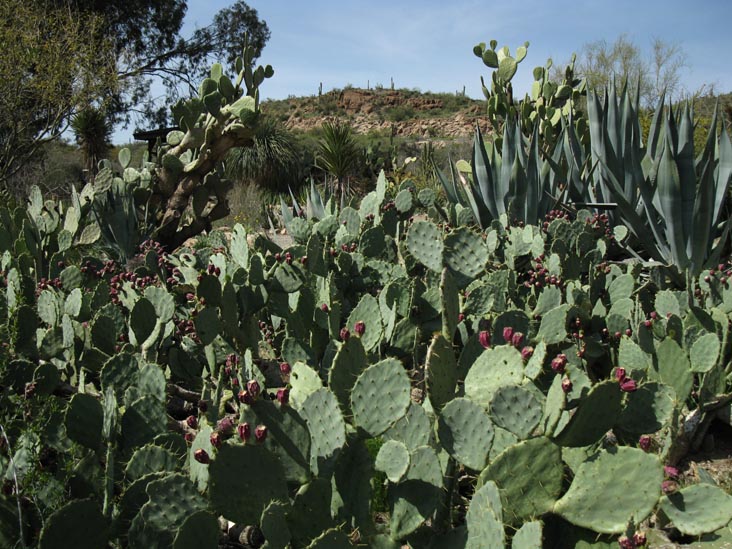
We saw the Boyce Thompson Arboretum in Superior:
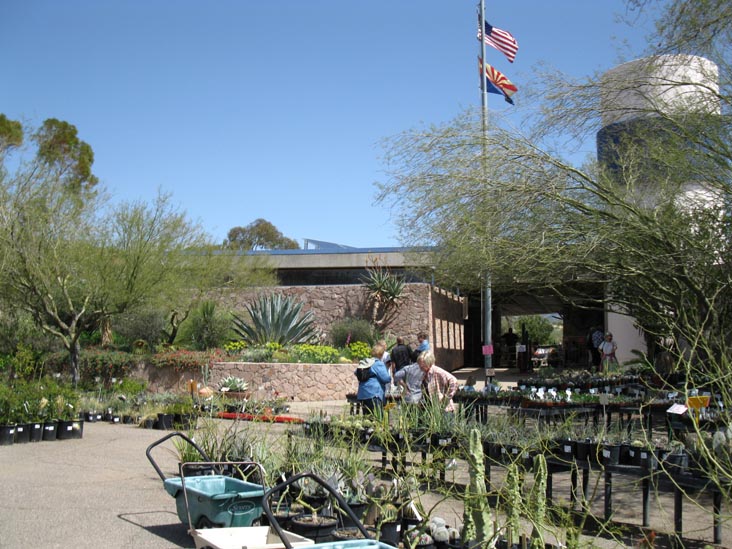
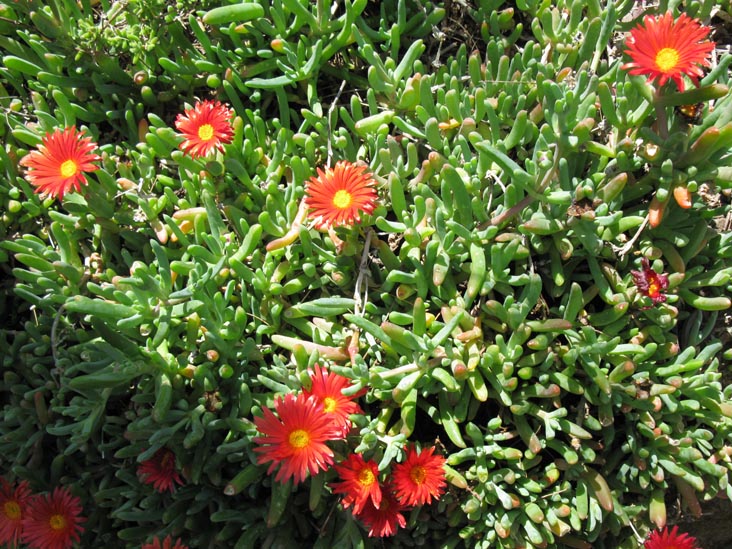
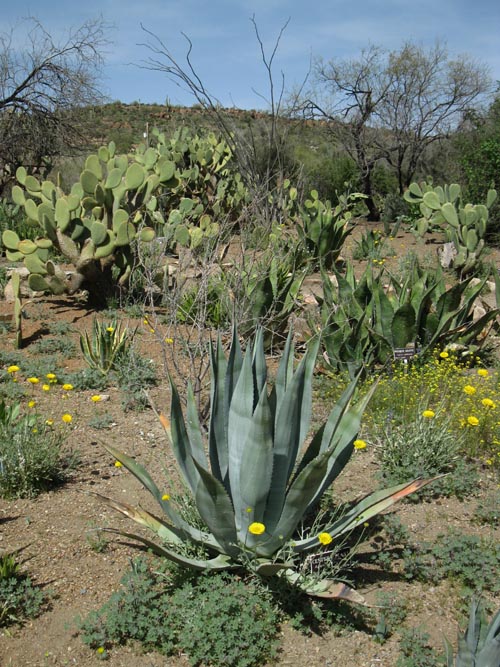
We also drove around Superior, got Blizzards at Dairy Queen, and drove there and back via US 60.
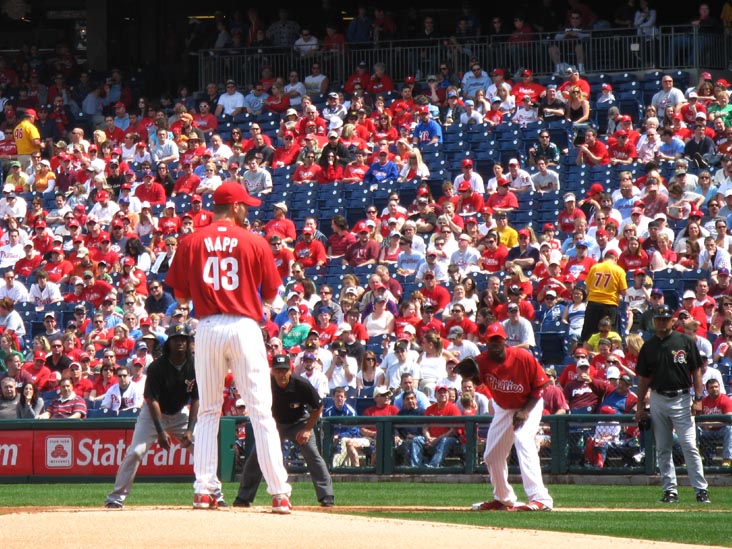
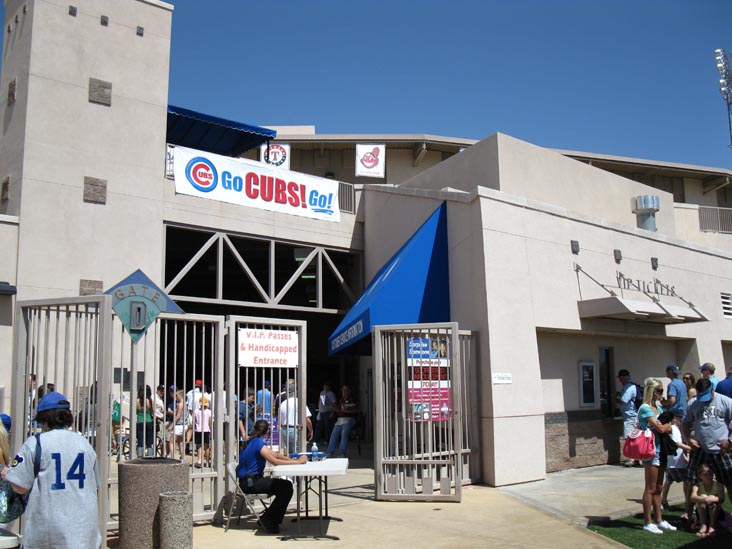
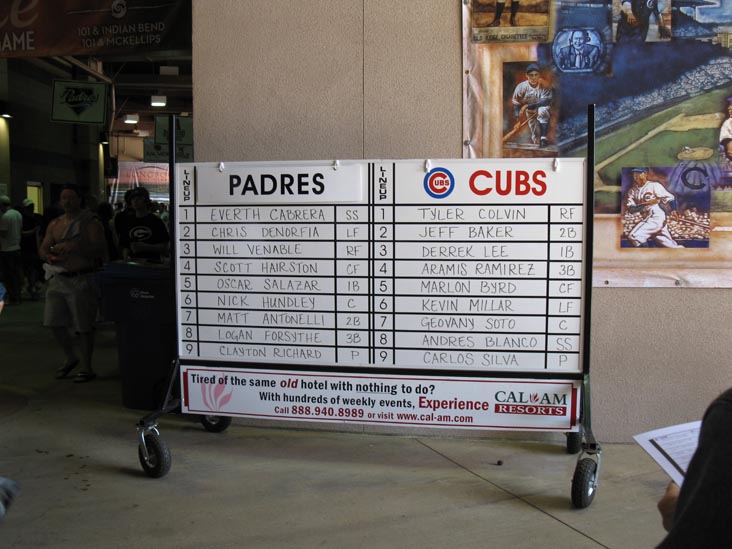
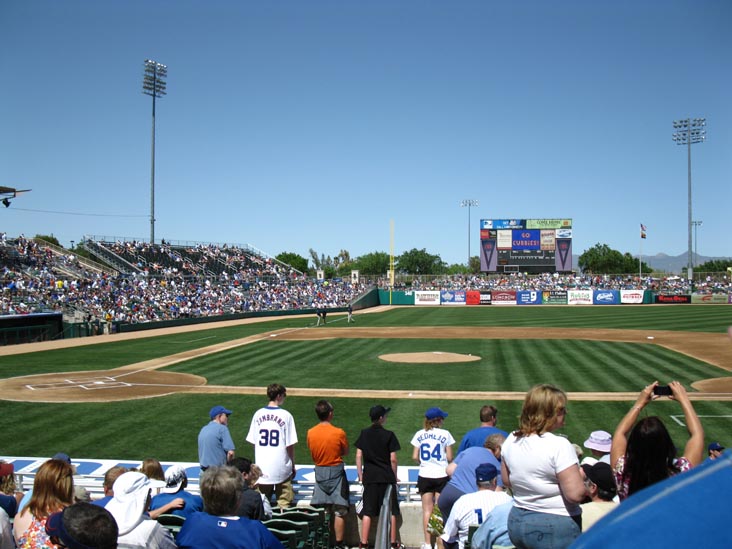
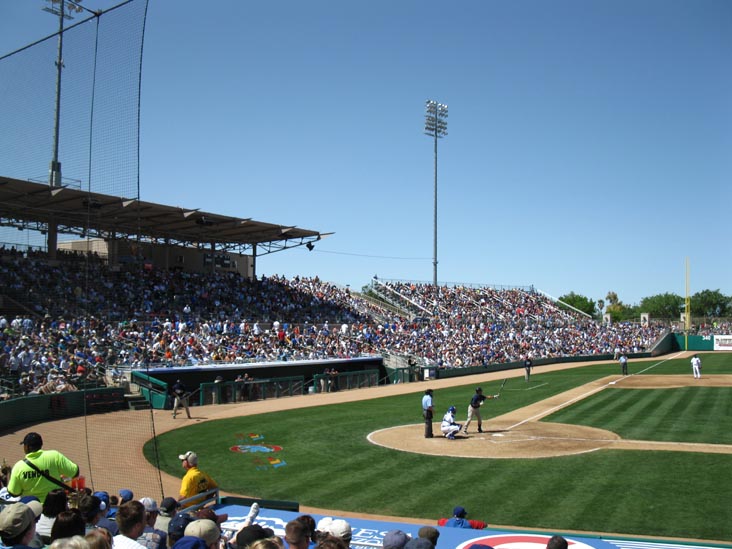
We went to a spring training game at Hohokam Stadium in Mesa, where the Cubs play:
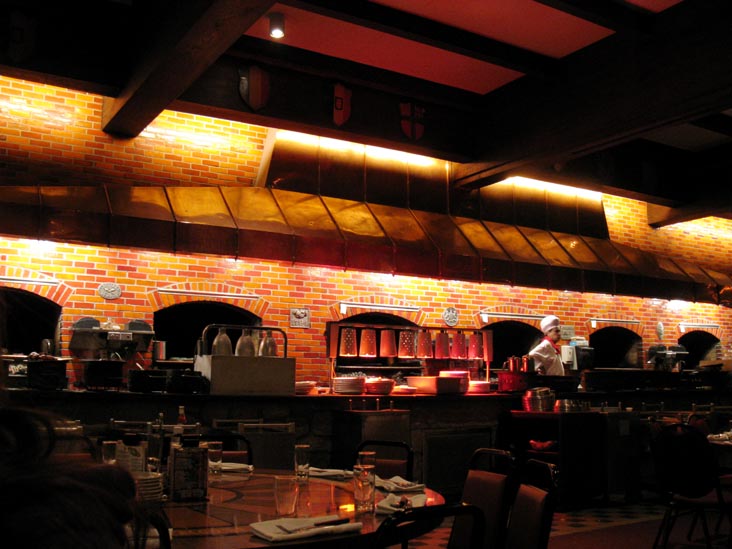
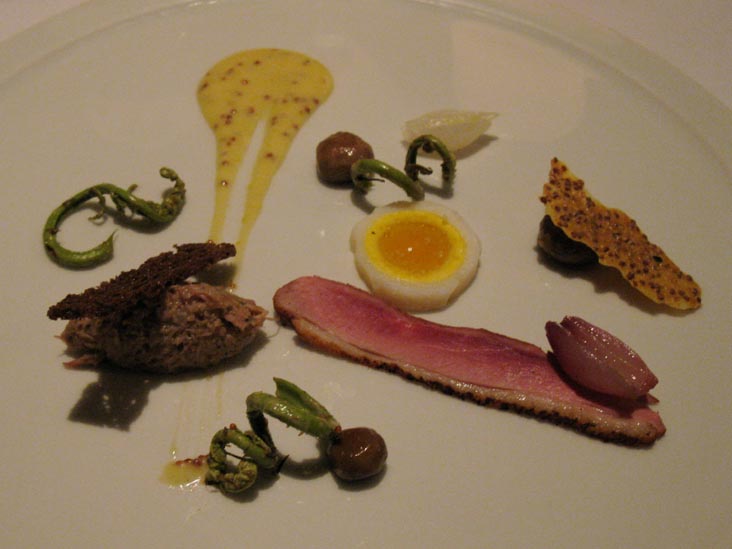
We ate at several new spots — Binkley’s Restaurant in Cave Creek was new for us, and was as great as we had heard it was going to be:
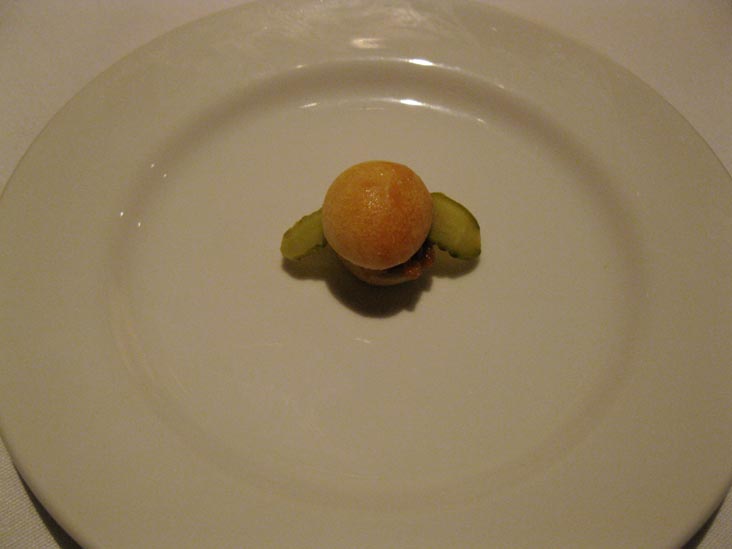
This is a really really tiny Sloppy Joe:
There is a lot of good food in the Phoenix area now, and a lot has opened in the last couple of years. Barrio Cafe, Noca and Tuck Shop are all recommended. We also ate here for breakfast.
Phoenix spends a lot of time tearing down old crappy buildings and replacing them with new crappy buildings, but it was cool to see a couple of nice examples of reuse/repurposing — Lola, a coffee place which we always liked up on Central Avenue, recently opened in one of Downtown Phoenix’s older buildings and St. Francis resurrected a relatively nondescript building on Camelback Road (more here, but I thought I remember the server telling us it was once a bank — I myself can’t remember what it was). (Tuck Shop above sort of falls into this category, as well.)
They’re busy obliterating Patriot Square in Downtown Phoenix for a new retail something-or-other. I wish it had occurred to me to take pictures of it a long time ago, because it was a really strange spot — located dead center in Phoenix at the city’s primo 0 East-0 West-0 North-0 South address, it was a space agey-looking horrible little public space. Public spaces in Phoenix, and in the desert Southwest in general, need to be conceived of in a different way than spots in places like the Northeast — it’s like that for a lot of perfectly understandable reasons: people drive, people have backyards, people gather for specific events and not necessarily just to loaf (if you want to see something ridiculous, go to Union Square on a summer weekend and check out all the people in bathing suits), etc., etc. The really nice public spaces in Phoenix are the “mountain parks” like Piestewa Peak and Camelback Mountain, both of which people actually patronize, as opposed to the East Coast-style squares city planners tried building. So suffice it to say, no one used Patriot Square. Or I guess some vagrants did, but as a true public space it was a total failure. (I’m skeptical that what they’re putting in there will be much better — big retail projects seldom seem to “save” neighborhoods and Downtown Phoenix has been slowly coming along through more small scale “organic” development, especially up near Roosevelt.) (On the other hand, it does seem like ASU’s big downtown campus has helped make the area a little more lively, too, so I guess it just depends what large project you’re talking about .) Anyway, I couldn’t get Patriot Square, so I did the next best thing — Hance Park/Deck Park just up the street:
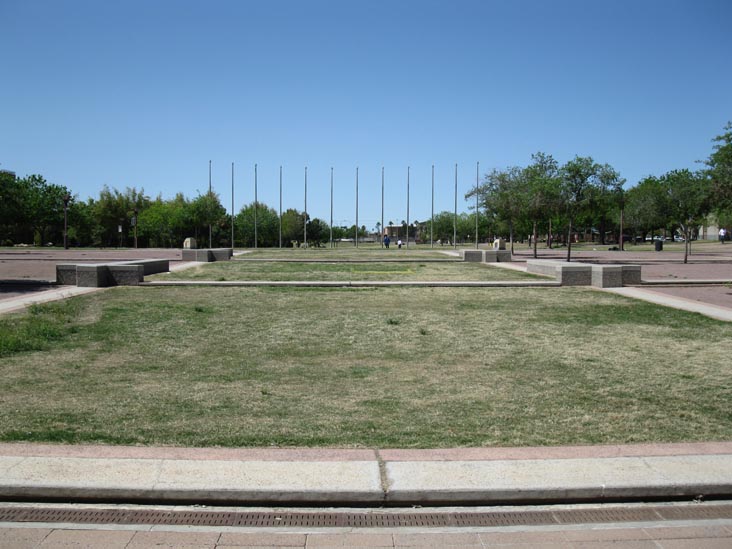
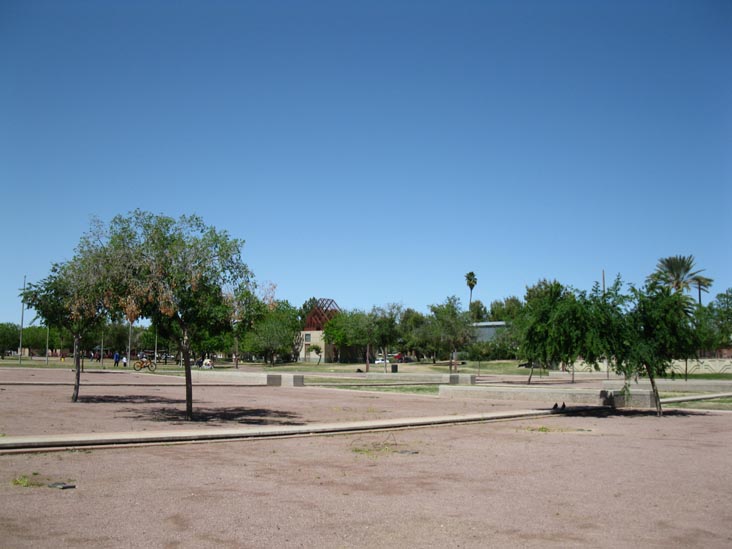
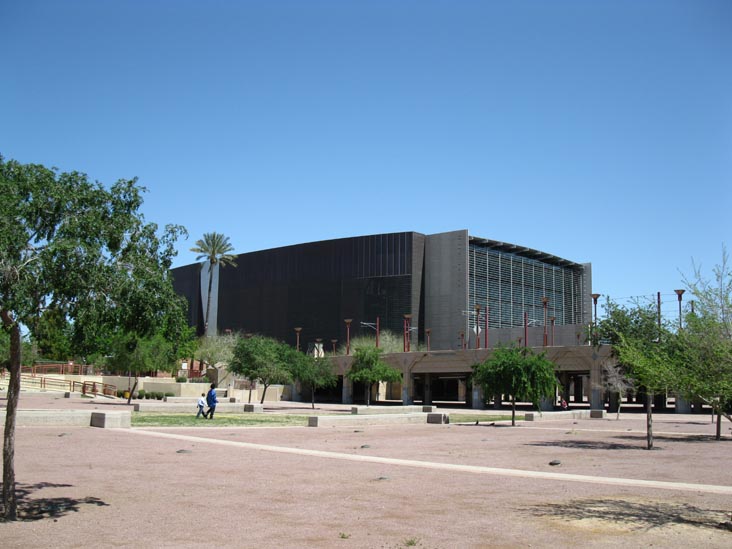
Hance Park/Deck Park was part of Phoenix’s smaller-scale version of the Big Dig (minus the massive cost overruns) back in the 1980s. People in Boston say they like the strip of park space above the Big Dig — they even sort of utilize it as a park space — but Hance Park in Phoenix just kind of sits there unused and unloved (some good background about the park is here). Not sure what can be done to “fix” it, or if anything should be done to fix it, but for now it’s a quirky 20-year-old monument to the final stretch of the mighty cross-continental Interstate 10.
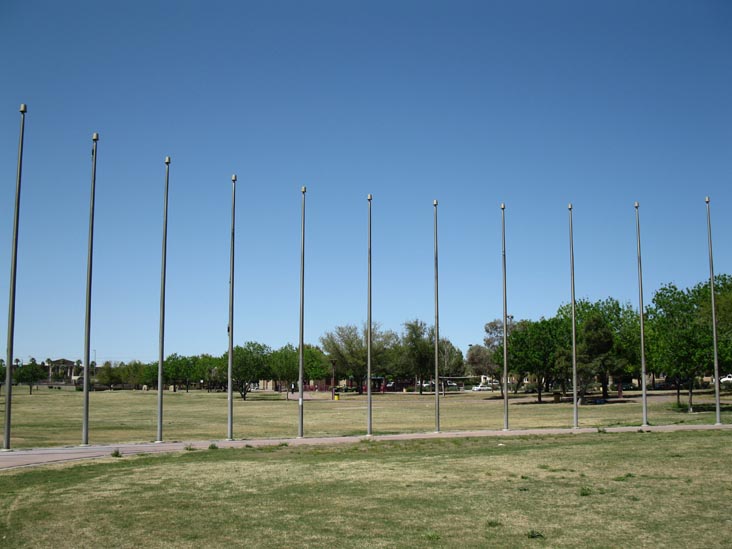
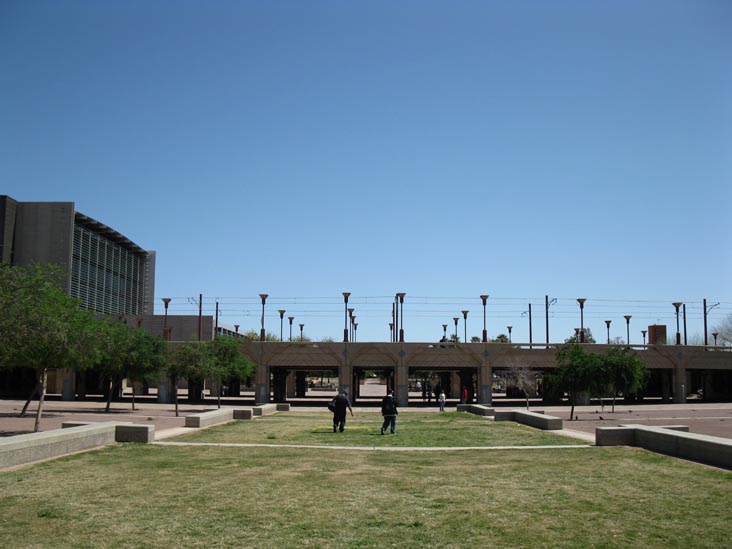
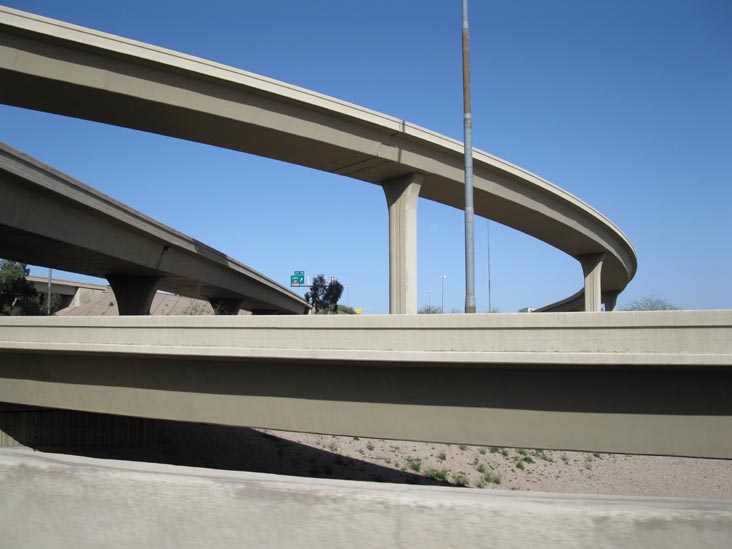
I’m collecting pictures of I-10 — once I get enough of them I’ll post a page, but here’s one for now:
There is something awesome about lighting stores.
Oh, and here are some more sunsets (two with video!).
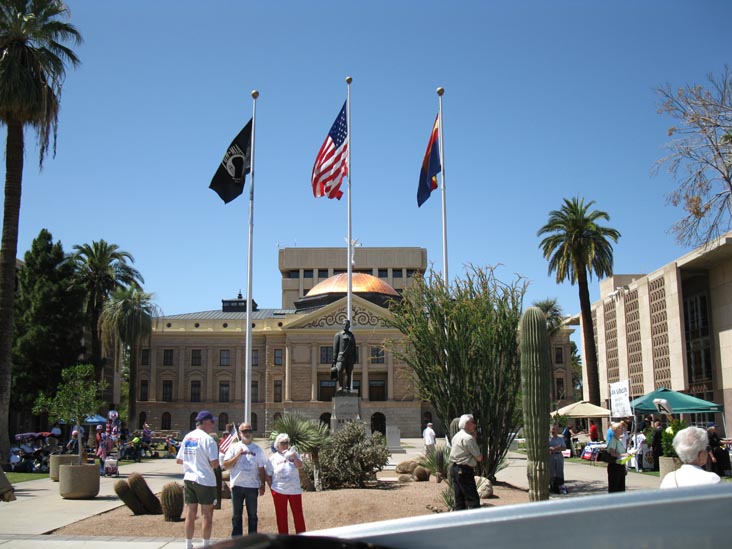
And yeah, Arizona has been in the news a lot lately — here’s where all the magic happens. And they were setting up for a Tea Party rally, to boot:
Posted: August 30th, 2010 | Filed under: Out Of Town
The Big Map visits a new continent, going to Peru via Panama in the first weeks of July 2010 . . .
July 3, 2010
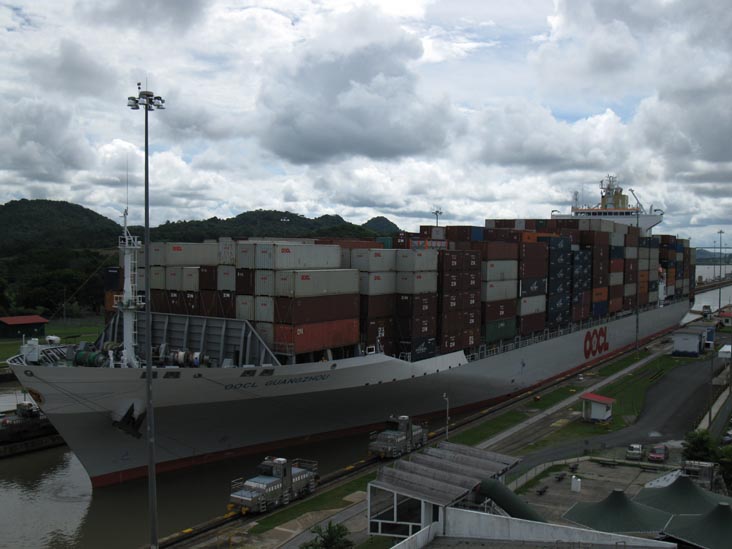
Breakfast at the world-famous Garden State Diner in Terminal C of Newark Liberty Airport . . . then a layover in Panama City, Panama. When we were booking the trip to Peru we noticed that many of the flights had odd layovers in Panama City — three, six hours or more. Jen did some poking around and found that there’s a cottage industry of people who give short tours of Panama City during airport layovers, thus the Panama City Airport Layover Tour, where a tour guide picks you up at Tocumen Airport after you’ve landed and drives you around before your connecting flight. On our tour, we saw the ruins of Old Panama and went around Colonial Panama. But of course the big draw is the Panama Canal, where we visited the Miraflores locks:
In general this trip took us to many places featured in our middle school geography textbooks. I had always wanted to see the Panama Canal, so this layover ended up being a lot of fun. We ate dinner and walked around Las Bóvedas/Plaza de Francia before our guide Javier dropped us off at the airport again for the connecting flight to Lima. If when you’re booking a flight to South America you find that you have a long layover in Panama City and you’re puzzling over what to do with yourself at the airport for so many hours, think about a city tour. There’s a link to the people we used on the tour page, but others are out there — highly recommended, especially if you want to maximize your time when traveling.
July 4, 2010
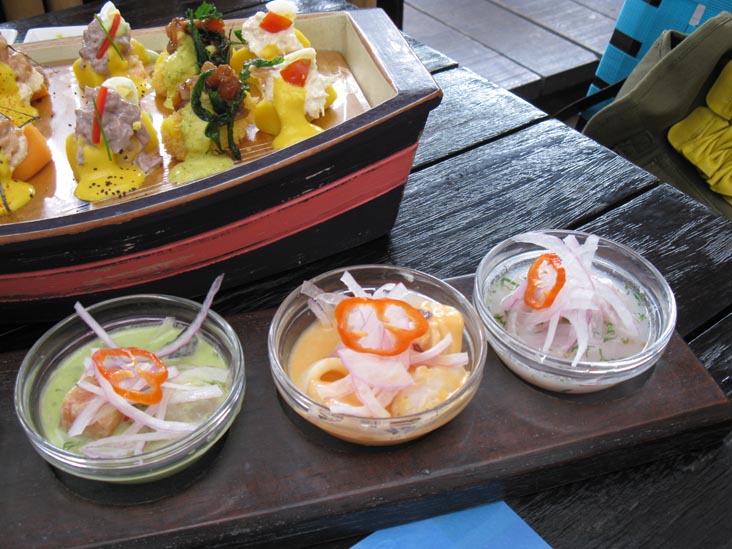
So yeah, the great thing about a long layover in Panama City is that you get to visit Panama City. But we didn’t expect to have a long flight delay that evening, so it wasn’t fun to get to our hotel in Lima so late. The next day, or that day, or whenever we finally got to sleep and woke up six hours later, we went right out to try some of the great food we had heard about in Lima. Peru’s cuisine is really wonderful — apparently more than other Latin American countries from what we’ve heard/read — and even the highest-end Lima restaurants are quite affordable (especially if you’re used to getting gouged back home). Gastón Acurio is kind of like the Emeril Lagasse of Peruvian food and we heard great things about his La Mar Cebicheria in Miraflores. Ceviche/cebiche is a national dish, even in the mountains where they use freshwater fish. Acurio riffs off of that tradition, and brings in an Asian fusion-y flavor that is typical of Lima (we heard that about 10 percent of Lima’s population is of Asian descent). Peru is also known for potatoes — you hear there are like 8,000 varieties of potatoes — and causa is another typical Peruvian dish that Acurio’s chefs riff on:
(By the way, Acurio is going to open a La Mar in New York soon . . .)
We walked back to the hotel via Calle Berlin and got ready for our Lima City Tour later in the afternoon that took us into Central Lima, where we visited El Bolivarcito, the bar in Plaza San Martín that is said to have developed the Pisco Sour. The tour also takes you to the Plaza de Armas and the Convento de San Francisco. Our time in Peru was relatively short, so we weren’t in Lima that long, but there’s something disturbing about how disconnected the historical part of Lima is from its nicer more tourist-friendly neighborhoods (i.e., Miraflores) — it’s sort of like visiting Los Angeles and spending most of your time in Santa Monica; Santa Monica is great and all, but there’s a lot of other cool stuff in the LA area, too. That said, there’s also something fun about bus tours — I want to take one in New York sometime — and honestly I’m not sure how we would have navigated getting from Miraflores to El Bolivarcito on our own — and made it back in time for dinner.
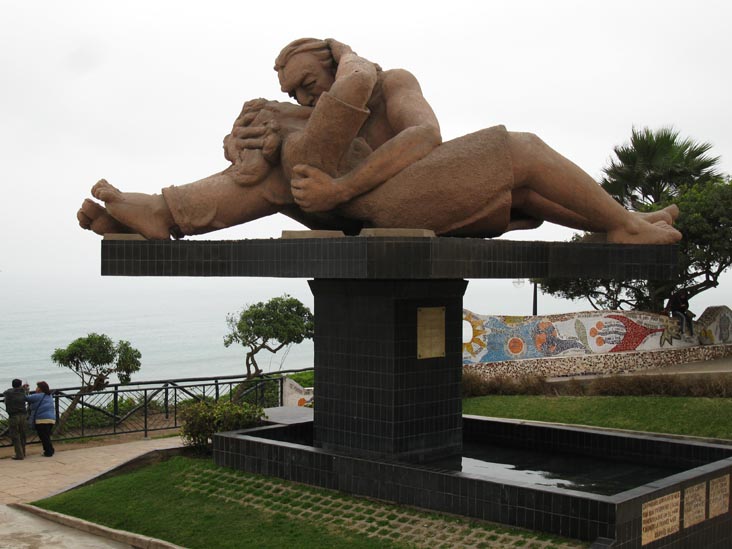
After Central Lima, the bus took us by Parque del Amor and deposited us at the fancy Larcomar mall along the cliffs overlooking the Pacific Ocean. Being along the Pacific Ocean while still in the Eastern time zone is a treat.
The other national dish in Peru is roasted chicken, and Pardo’s Chicken does it about as well as we’ve ever had it. So good . . .
July 5, 2010
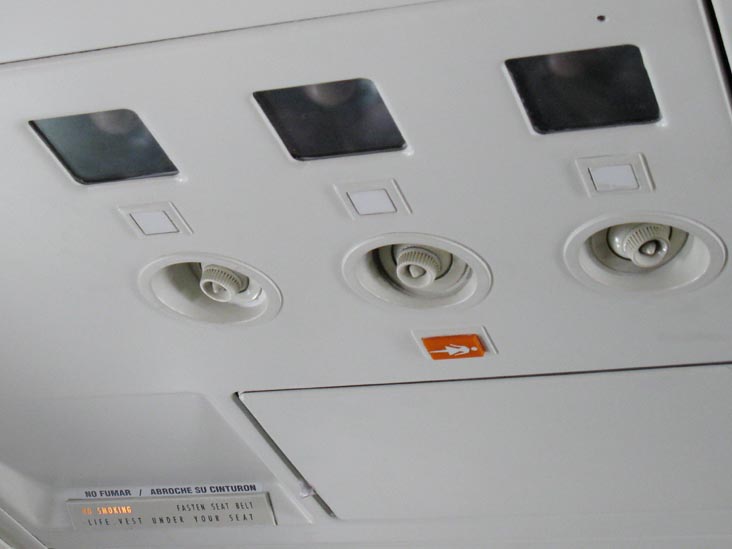
We took a Peruvian Airlines flight to Arequipa (and its charming old school-style airport — they still use plane stairs and have an observation deck!) to begin traveling around the high plains of the country and test our supply of Diamox. I Wikipediaed that Boeing stopped making its 737-200 planes in 1988, which is clear from the outdated flight attendant call buttons you see on those planes:
Since our flight was delayed (again!) we only had time for an abbreviated city tour of Arequipa, which we ditched because we really wanted to see the colorful Monasterio de Santa Catalina in Arequipa’s city center:
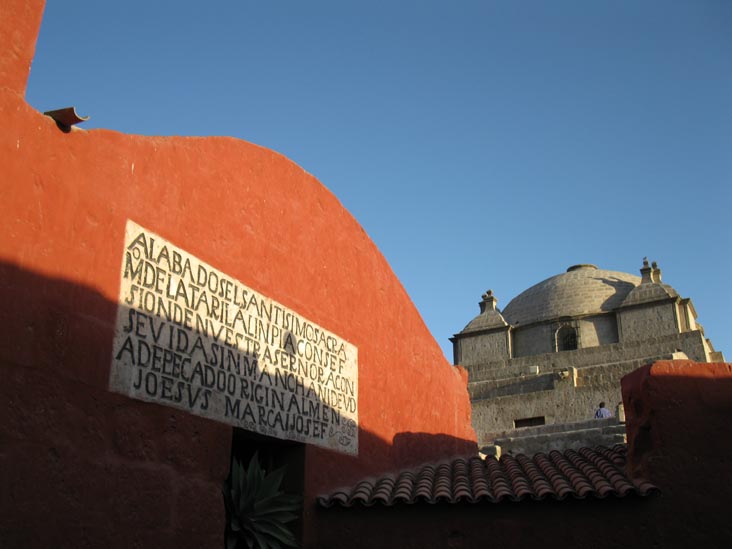
We had little time in Arequipa, but we did get to see the nice Plaza de Armas and Basílica Catedral de Arequipa and eat at Zig Zag Restaurant, where we tried Alpaca for the first time (like a gamy version of pork . . . sort of). The Hostal Casona Solar, where we stayed the night is relatively new, and very cute.
July 6, 2010
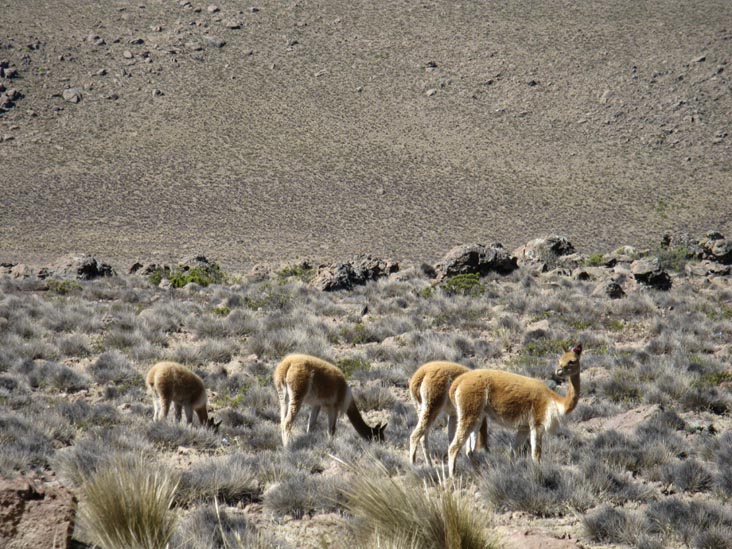
It’s really fun to get driven around, and we headed out first thing in the morning toward Colca Canyon, which is not only deeper than the Grand Canyon but also features a dustier, rockier road, which is also always very cool. The drive to Colca Canyon takes you through Reserva Nacional Salinas y Aguada Blanca, where you can try your first coca tea (consider delaying that drug test for your school bus license) and see three of the four camelid species in Peru, including the Vicuña:
The Mirador de Los Andes was the highest elevation we traveled to — 4910 meters, which equals, according to some back of the napkin calculations, 16,108.9239 feet:
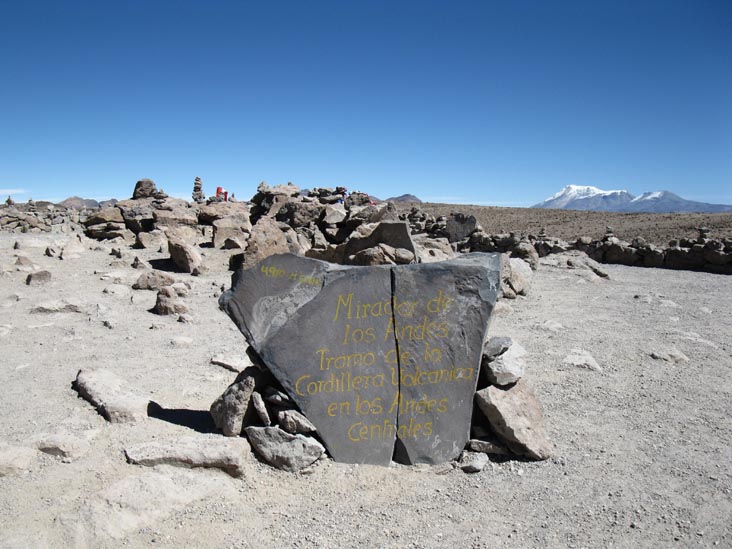
Yes, you can feel how thin the air is up there. From there, we descended into the canyon area into Chivay where we tried cuy for the first time in a sort of stew (more on cuy later) and spent some time wandering the streets and Chivay’s main square.
The drive from Chivay to Cabanaconde, where we stayed the night, is dusty and bumpy, though we saw some of the area’s famous condors at Mirador Cruz del Condor late in the afternoon:
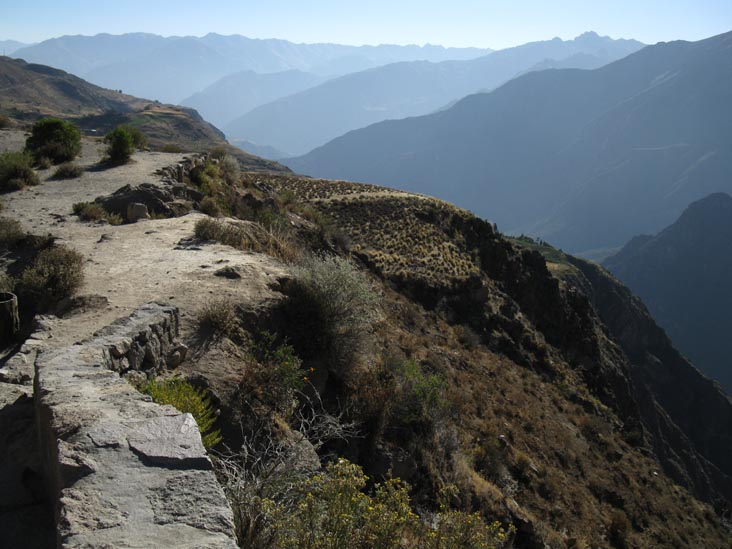
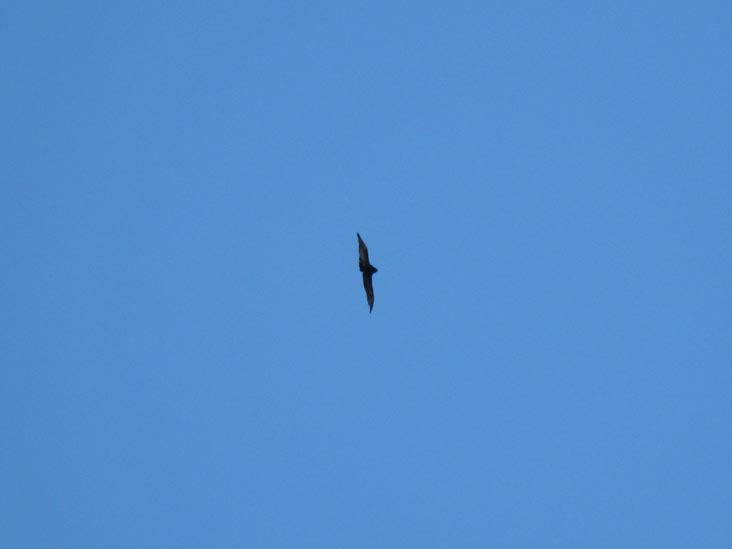
The view from Mirador Achachiua near the village of Cabanaconde is just as striking, and the village itself is nice — we stayed the night at the Kuntur Wassi Colca Hotel, where we also ate, and enjoyed strolling around the town’s quiet main plaza and visiting the church there.
July 7, 2010
The next day we drove back out toward Chivay on the same bumpy road, stopping again to look at birds and people, though more people than birds that morning:
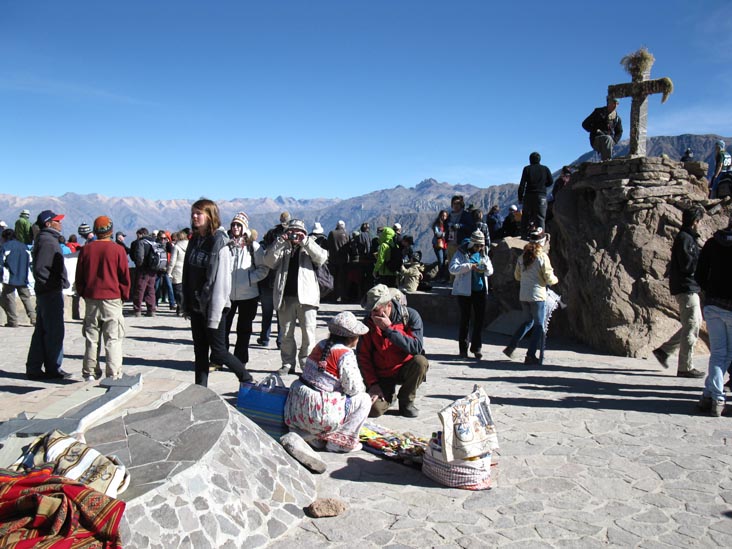
On the way out of the canyon, we visited a beautifully restored church in Maca and had more lunch at the same place in Chivay while the driver made sure the car’s parts were still attached.
The long drive to Puno took us back through the reserve area, then past the Laguna Lagunillas area where we got to see some Andean Flamingos. We also got lost in Juliaca, though we finally made it to our hotel in Puno. Our driver had to make the round trip back to Arequipa that same night. Yeesh.
That night in Puno we tried cuy for the first time in all its glory. The chef at Kero’s Restaurant takes great pride in the presentation of the dish:
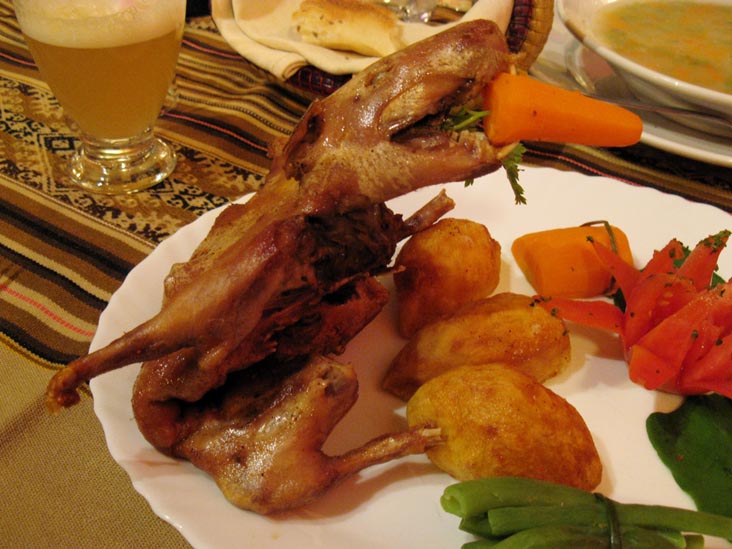
Actually, he or she posed the cuy in different ways for everyone who ordered the dish — each pose more absurd than the last. Cuy itself is good though it’s kind of a pain in the ass to eat — some real fancy restaurants use the meat in various ways without making you tear at it with your hands (which is expected, by the way).
July 8, 2010
We were picked up early in the morning and taken down to the port to depart on our overnight stay on Lake Titicaca, that other great memory from middle school geography. The Uros Floating Islands, made out of Totora reeds, are just fascinating:
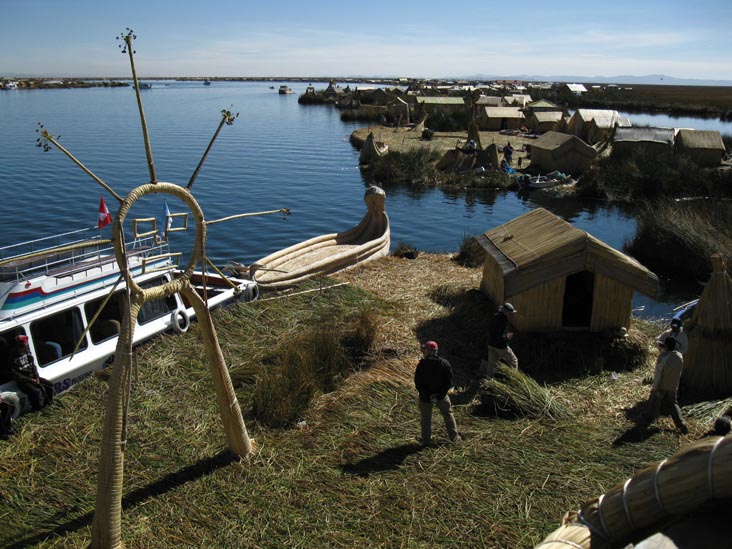
The point of our trip was to do a homestay on Amantaní Island, which is about three hours from Puno by boat. Amantaní is unusual in that there are no cars or dogs on the island (intriguing concept!). We finally got to really look at the stars in the sky — the most stars I’ve ever seen, ever — and it was really, really cool to finally get to see the Southern Cross.
The view from Pachamama on top of Amantaní was beautiful as well:
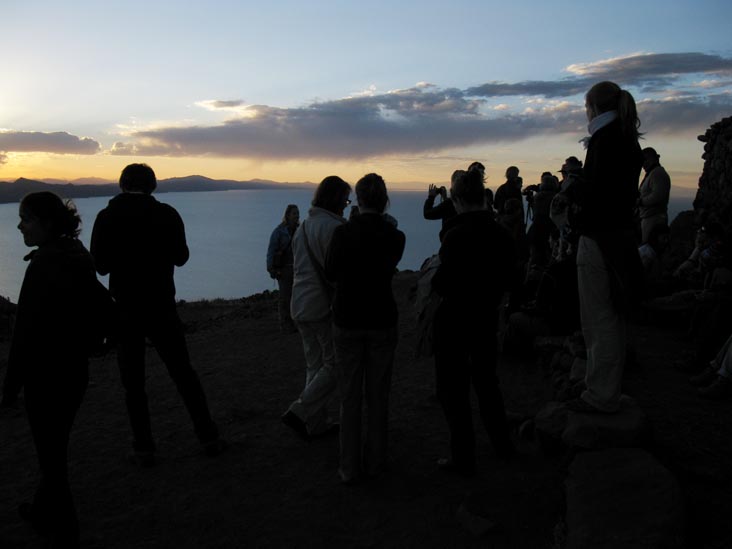
July 9, 2010
Back to Puno via Taquile Island:
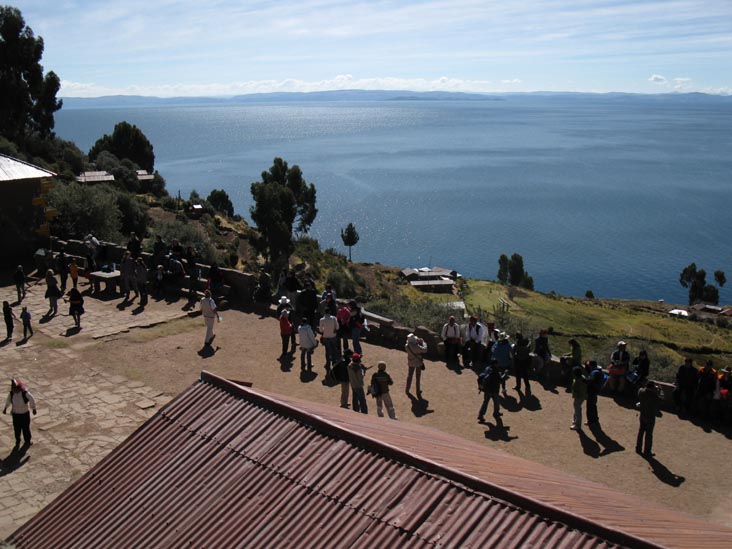
Shopping at the arts-and-crafts cooperative in Taquile, a lunch/traditional clothing/customs primer and a steep 533 Steps back down to the boat.
Back in Puno, we checked out Puno’s cathedral in the city’s Plaza de Armas, went by the main market and tried api before visiting the church on the Parque Pino. I was curious about pizza in Peru, which is so ubiquitous in the tourist areas, so we tried some with Alpaca sausage.
July 10, 2010
When traveling from Puno to Cusco you can either take a plane, which is an hour away at the airport in Juliaca, the train, which is slow and pretty expensive, or a tourist bus, which is awesome because it is relatively cheap and stops at points of interest along the way. There are two main bus competitors — Inka Express and Turismo Mer. We happened to take Turismo Mer. They both follow each other along the same route during the day.
The interesting thing the Turismo Mer guide told us about Juliaca is that it all looks half-built by design — apparently the government taxes property at a higher rate when the buildings are finished, so buildings tend to stay in a permanent state of construction, thus the steel concrete stakes sticking out the tops of the roofs:
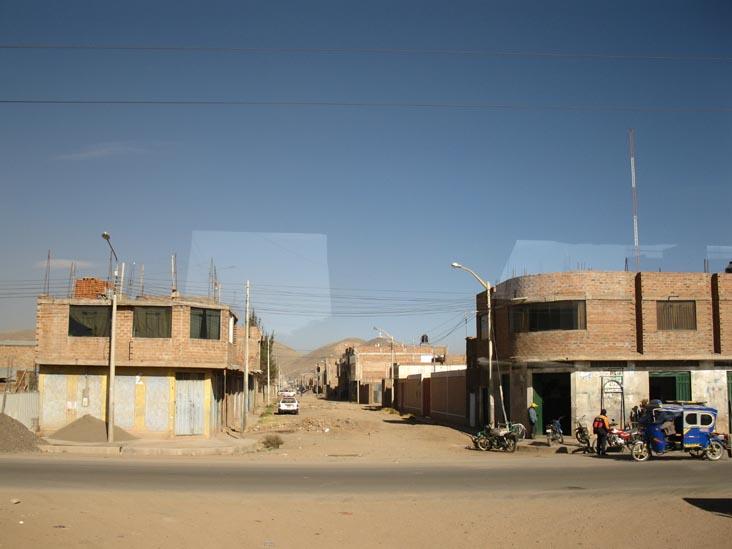
Sometimes they are less noticeable, but once you know what you’re looking at, you realize that they are nearly everywhere. Sometimes it seems that there are more “unfinished” buildings in Peru than finished ones. Maybe at some point architects will make them a permanent feature . . .
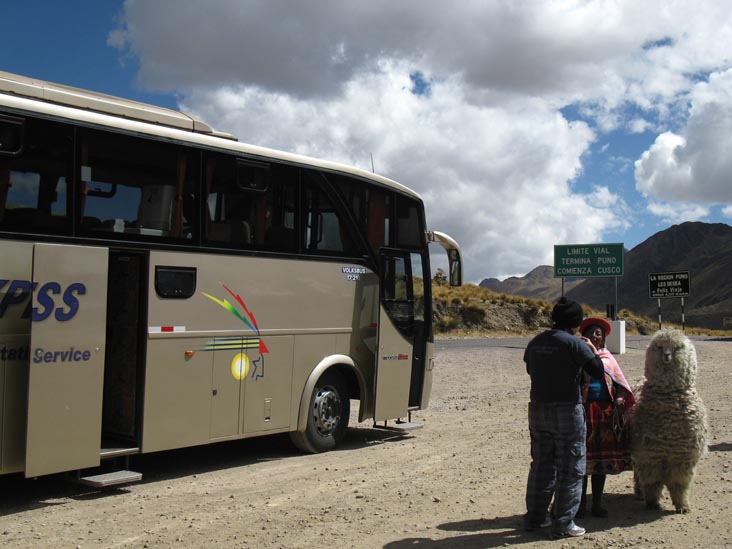
There are some interesting pre-Colonial artifacts in Pucará and Abra La Raya marks the border between the Puno and Cusco regions of Peru:
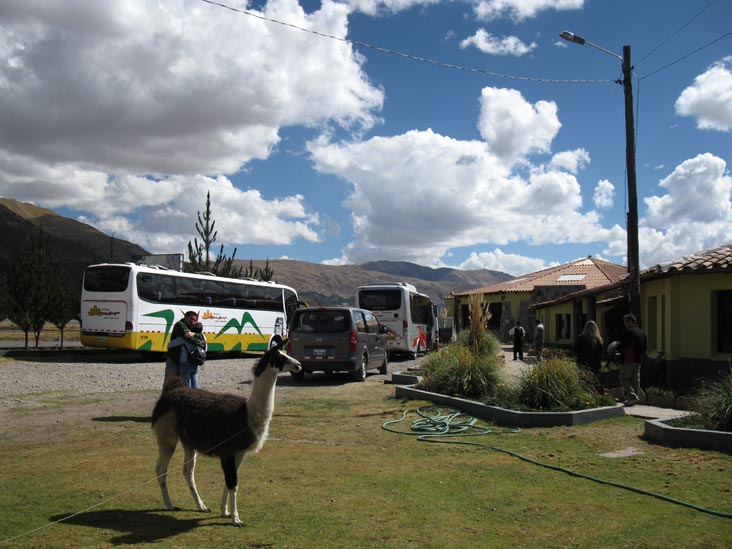
A buffet lunch in Sicuani, with llamas chained up in the front:
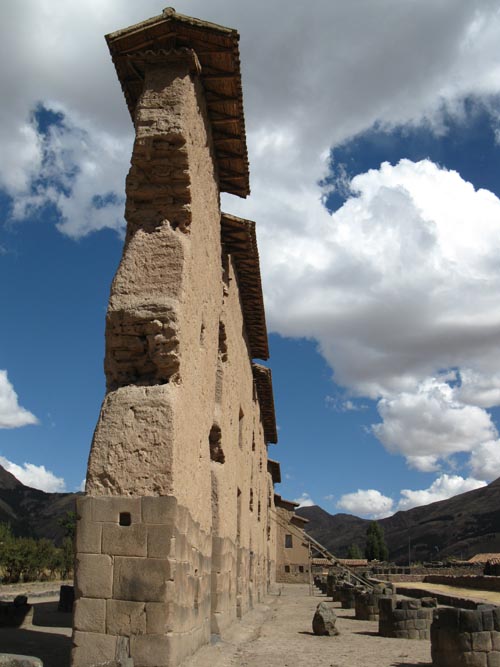
The Inca outpost of Raqchi:
They won’t let you take pictures of the ridiculously ornate altar at the church in Andahuaylillas, so you’ll have to take our word that it was stunning.
We got to our hotel in Cusco toward dusk and set out to see the Kusikay, which is a homegrown Cirque du Soleil-type of performance created by César Aedo — it’s well done, and riffs on the Virgen del Carmen festival in nearby Paucartambo (more on that later). We had dinner afterward at Gastón Acurio’s Chicha restaurant, which fancifies high plains cuisine — recommended, as well.
July 11, 2010
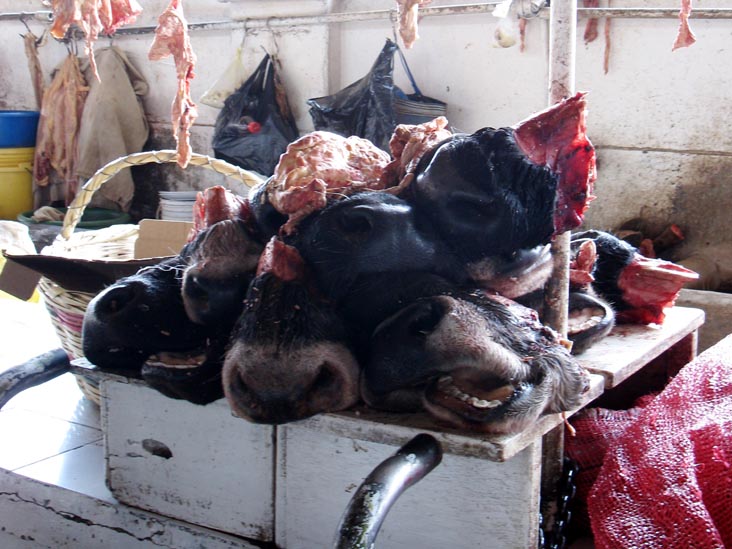
A Cusco city tour which took us by Plaza Limacpampa, the Santo Domingo/Qoricancha site, down Avenida El Sol, around the Plaza de Armas, into the Basílica Catedral (no pictures, but feel free to buy a postcard), through Plazoleta Espinar and into the Mercado San Pedro, where they sell this:
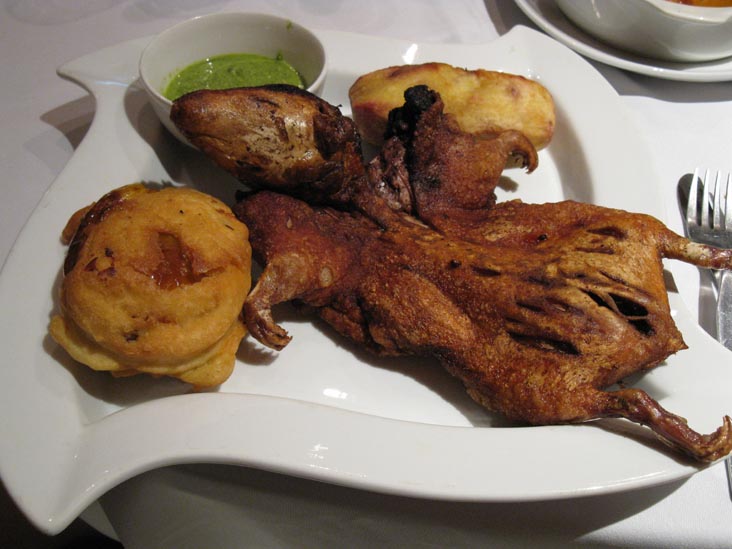
Afterward we watched the Spain-Netherlands World Cup final at Rosie O’Grady’s Irish Pub, ate a snack at a Bembos (the McDonald’s of Peru), looked around for souvenirs across the street from the huge Historia del Qosqo mural on Avenida El Sol and later ate more cuy at A Mi Manera (recommended):
July 12, 2010
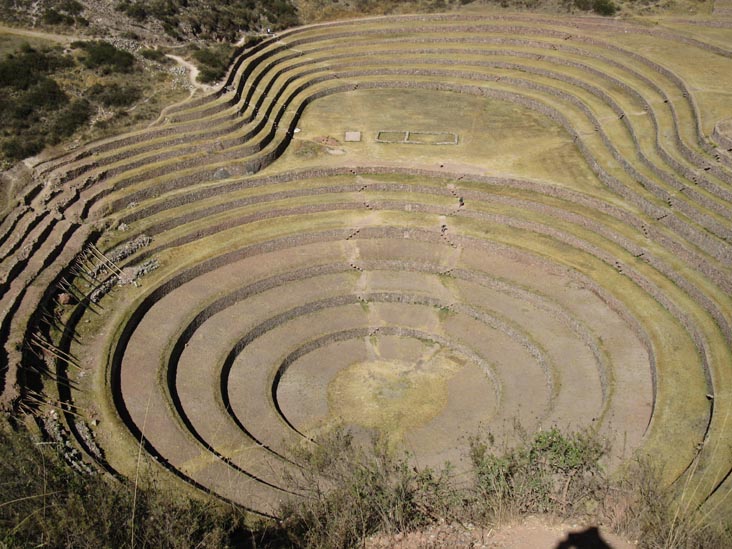
The experimental agricultural terraces of Moray are incredible to see and walk down into. Pictures do not completely express how massive they are:
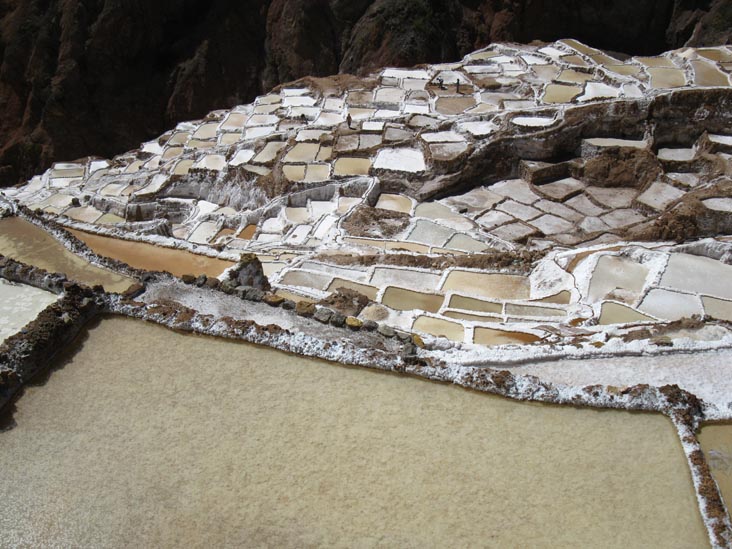
The Salineras de Maras salt mines on the way to Urubamba are similarly impressive — another fascinating Inca project that farms salt from the salty spring water coming out of the mountain:
Lunch at Sol de Mayo in Urubamba before spending a restful afternoon at El Huerto Paraíso Sacred Valley Lodge, where the meals are made fresh with local ingredients from farmers from the surrounding community.
July 13, 2010
The folks at El Huerto make a big deal about supporting the local economy because they are located in and around the small producers who participate in the Chichubamba Agrotourism Project, which takes visitors around to visit the farmers/artisans in the neighborhood of Chichubamba. We visited a Chicha house, a ceramics maker and a guy who raises cuy. At our request, he demonstrated how to kill a cuy:
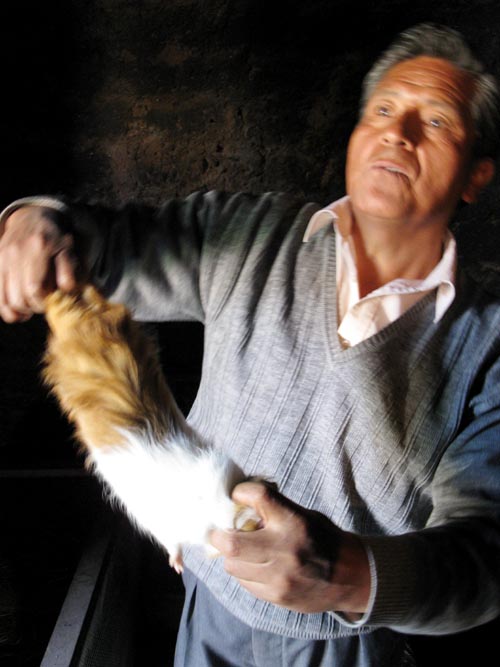
On every trip I regret not taking a picture of something — the naked mystic walking around a traffic circle in Jaipur, India, for example! — and I really wish I had filmed the cuy-killing demonstration but alas, I didn’t. A word about cuy — yes, schoolchildren keep them as pets in the U.S. and yes, they are “cute,” but they are also a great low-impact meat that has a small ecological footprint — they are vegetarian and do not require great resources to raise. Environmentalists are already encouraging us to eat smaller fish to protect fish stocks — sardines, etc. — so maybe we’ll see more cuy soon. Or not . . . that said, I liked the cuy I tried, though like I mentioned above, they were kind of a pain to eat . . .
After lunch at El Huerto, we were taken to Ollantaytambo where we boarded the train to Aguas Calientes/Machu Picchu. Children of the Lionel-Industrial Complex extol the virtues of train travel, and the relatively short ride from Ollantaytambo is relaxing and beautiful:
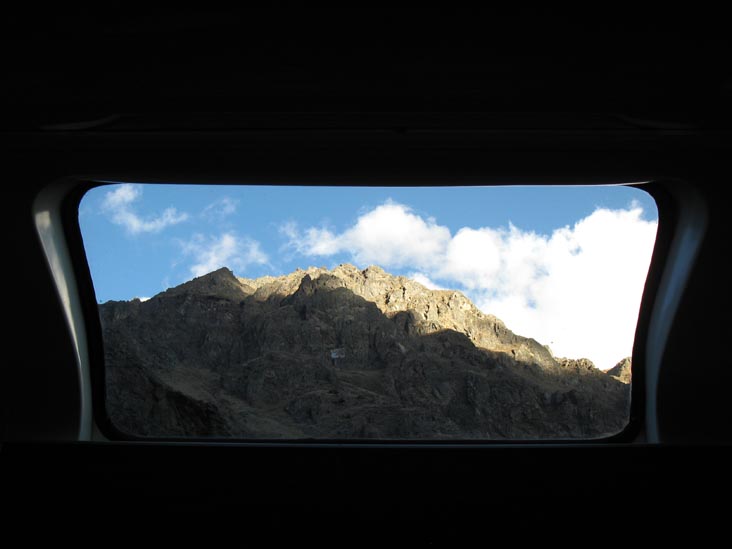
We got to our hotel in Aguas Calientes just after dark and ate an early dinner there to prepare for our early wake-up call for Machu Picchu.
July 14, 2010
Machu Picchu. It is as advertised. Wow:
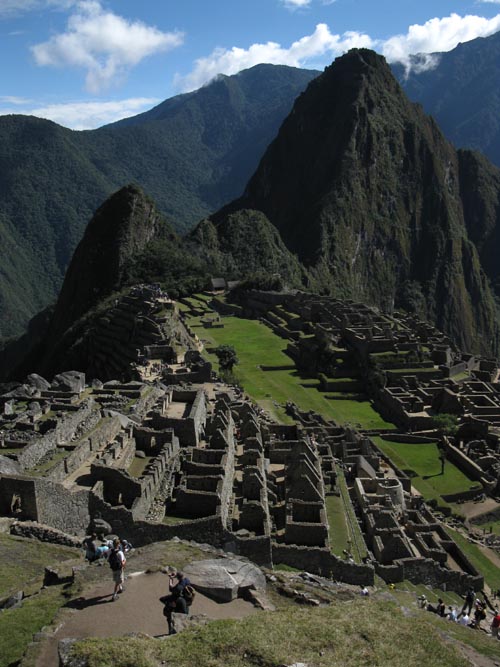
We got up early to get the bus from Aguas Calientes and watched the sunrise from the Agricultural Terraces. There is a lot to take in at Machu Picchu. We also walked up the Intipunku Trail, which is the final stretch of the Inca Trail that leads into the site . . . that amount of hiking was more our speed — we didn’t have that much interest in one of the multi-day treks that many people do, especially after smelling some of the hikers we ran into that morning.
Afterward, we had lunch back in Aguas Calientes, strolled through the main plaza, shopped for souvenirs, enjoyed a pisco sour back at the hotel where we left our bags and eventually got on the train back to Cusco. Another word about train travel: While the relatively short ride from Ollantaytambo to Aguas Calientes is relaxing and beautiful, the relatively long ride from Aguas Calientes to Cusco is excruciating and makes you wonder what the children of the Lionel-Industrial Complex are thinking when they extol the virtues of train travel. Part of the problem seems to be that the tracks in the river valley were never designed to move trains faster than, say, 15 miles an hour or so. Which is to say, Cusco is 70 miles from Aguas Calientes — so four hours later we finally got to the station at Poroy, and it took another 15 minutes or so to get to our hotel back in Cusco.
July 15, 2010
Each year from July 15-18 the small town of Paucartambo near Cusco stages the Fiesta Virgen del Carmen in honor of its patron saint. We were excited that our trip to Peru coincided with the dates of the festival, and we organized our trip accordingly.
We got up early the next day to head out with our guide and a driver to the town of Paucartambo. The trek to Paucartambo was epic. We tried the famous bread sold alongside the road in Oropesa. Then a landslide on the Huambutio-Paucartambo road outside of Huambutio forced us to travel to Paucartambo via Pisac, but not before having to fix the first of three flat tires on the trip there. Here was our first flat, and the There-I-Fixed-It! makeshift jack:
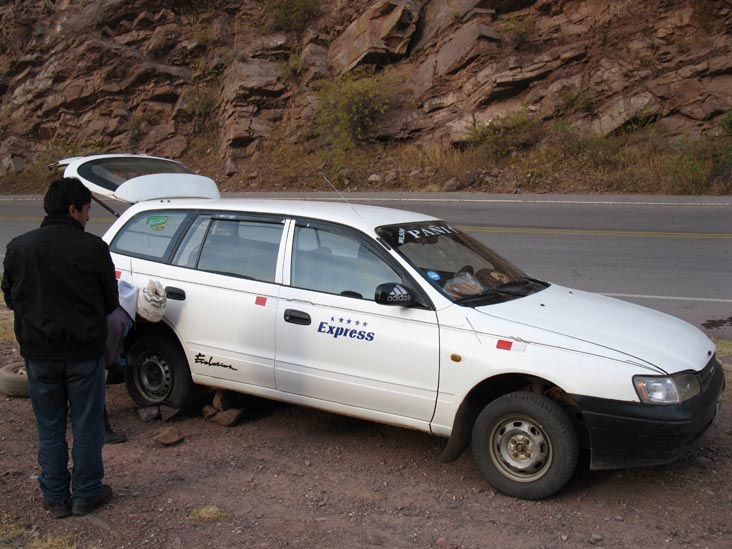
Pisac is a charming town. So is Colquepata, though we only really saw the llanteria while we were there. A word about tubeless tires — yes, if you puncture a hole in one, it can be a problem, especially if you are driving on what could be some of the rockiest, dustiest, bumpiest roads in the hemisphere, but they are also easily patched — provided there is a llanteria nearby. We gathered that the llanteria in Colquepata did a brisk business . . .
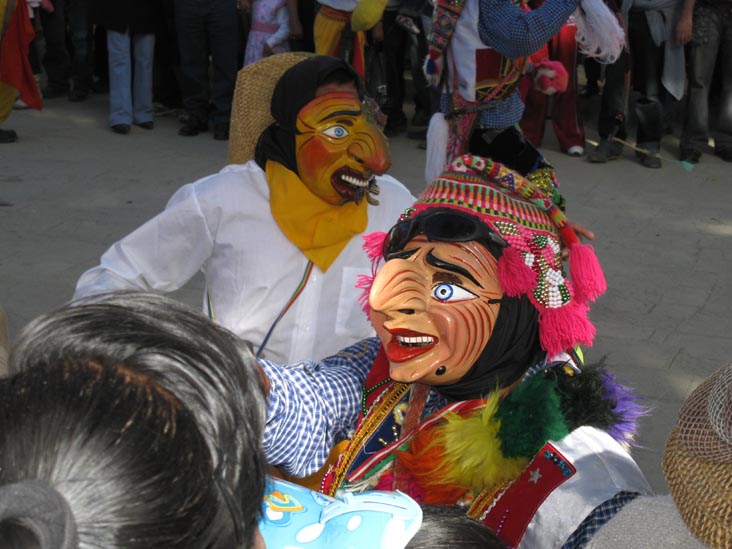
We finally made it to Paucartambo about — no kidding — five hours later. And our guide Miguel told us later that we got there just in time, the driver having discovered a third flat tire after we parked in the town. Anyway, the festival — it’s a remarkable display, and we were only there on the beginning day before things got really interesting. It’s something to see — the narrative of César Aedo’s Kusikay, which we mentioned seeing above, involves a big city tourist arriving in Paucartambo for the festival, camera in hand, and hilarity ensuing. It’s kind of like that — there were a lot of tourists like us, but there were a lot of tourists from, say, Lima or other big cities that wanted to gawk at the dancers and masks. The whole thing is a hoot — and really cool to see. Here are some of the characters . . . a trickster Maqta with a yellow fever-ridden Chukchu behind him:
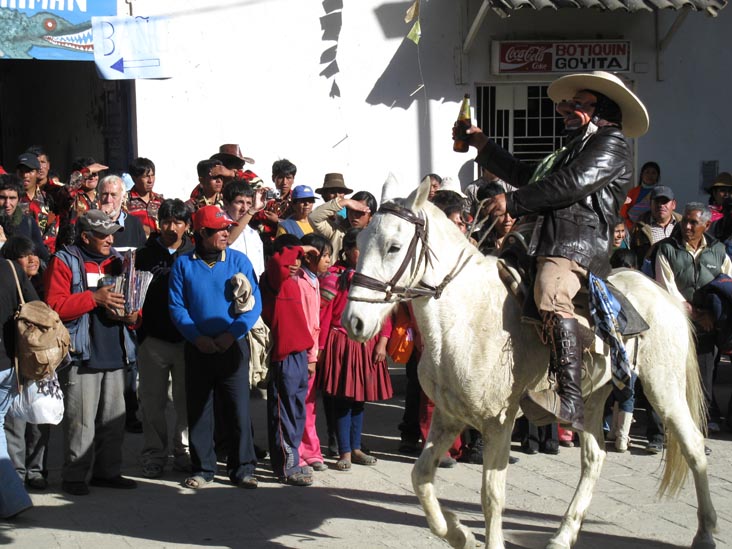
One of the beer-swilling, horse-riding Majeños who have come from abroad to wreak havoc:
The bullfighting Waka Waka dance:
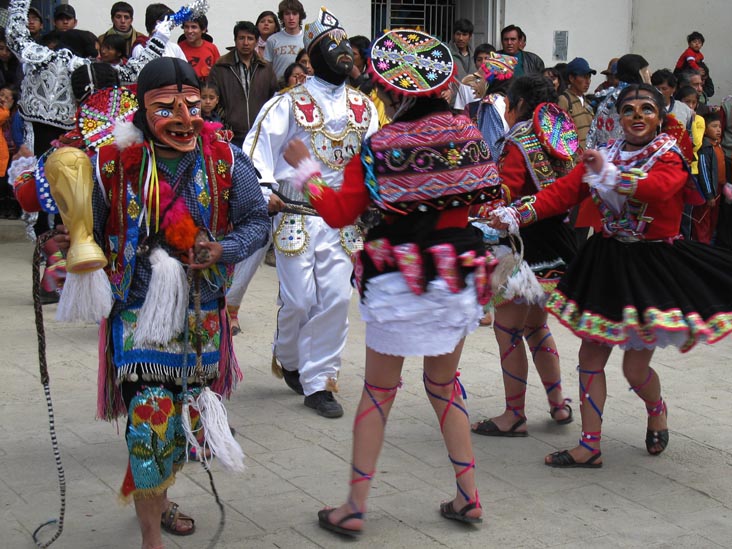
Also, the Qhapaq Chuncho, Contradanza, Qoyacha, Saqra, Negrillo, Qhapaq Qolla, Qhapaq Negro, Chunchacha, Danzaq and Auqa Chileno characters.
On the first day of the festival the characters, which function as archetypes in Quechua/Paucartambo/Peruvian history, “enter” the town via Puente Carlos III (by the market) toward the main square, finally making their way to the main church to pay respect to “Mamacha” — the Virgin Mary icon at the church. The first day is like a big parade, and the dancers perform for people all afternoon. Cool stuff — totally recommended. (I haven’t found a great explanation of the festival online, but if I come across one, I’ll add it.)
We had lunch — caldo de gallina — at a spot by the main square. Mercifully, the ride home was a lot less eventful, and by that time the authorities had reopened the main road again. We had dinner that night back in Cusco at Cicciolina, which was also really good.
July 16, 2010
Back in Cusco. This, incidentally, is the least pedestrian-friendly street I’ve ever walked down. Did some shopping at the Inkakunaq Ruwaynin store, which is recommended for its fair trade practices and quality, before heading over to the airport to fly back to Lima. On the way back from the airport — this time during the day — we saw how Lima is trying to spruce up its coastline.
We spent our last day in the country eating some of the best meals of the entire trip. Rafael is wonderful — highly, highly recommended. Costanera 700, which Calvin Trillin once wrote about (a friend sent us that tip — thanks, Chris!) is a great expression of Japanese-Peruvian fusion cuisine. And the picarones at Astrid y Gastón are as great as they say they are (thanks, Patricia!).
We also went back toward Larcomar and Parque del Amor to take pictures:
Then we passed by Parque Intihuatana, where we peered down at the intriguing looking La Rosa Náutica restaurant, where we did not eat. Also, the Cuy Arts store on Avenida Larco is fun and the Vivanda supermarket on Avenida Benavides is a great place to buy pisco — just as cheap as at the airport, in fact.
July 17, 2010
Flew home . . .
Notes
We found Peru to be very accessible and friendly to tourists. That said, here is an old brochure we came across with some good advice . . . just excuse the bad translation. The food in Peru is universally awesome. Here is nearly everything we consumed and here are pages for Pisco, Coca and those cool Toritos/Pucara Bulls you see on the rooftops. And here’s what the money looks like. Oh, and I just did a final count, and I guess we took somewhere around 4300 photos — so don’t feel like you have to look at them all at one time — we understand . . .
As mentioned above, Peru is very accessible, but we used an in-country travel agency to help us book the details and make sure we were able to be where we wanted to be when we wanted to make sure we were there. Apus Peru was very good to work with and they make sure to use responsible local operators/tour guides. We wouldn’t hesitate to recommend them, especially if you’re looking to do treks or hiking trips around Cusco or to Machu Picchu, which is their specialty — we were told over and over that they do their best to employ locals and, more importantly, pay them fairly for their work, which is apparently an issue for treks and hikes. The local tour operators Apus Peru connected us with were all good, and where we used them, I included links for the companies on the individual pages herein . . . if you’re curious about anything else, feel free to ask us.