After agreeing on the price of the house we set out to secure the mortgage. We also knew that there were legal things that we had to look over, so we decided to run it by some people.
When I say "we decided to run it by some people," I mean that I thought it would be OK just to send the real estate binder to a friend who graduated from law school and who once worked as a practicing attorney. Jen of course knew better, and our attorney friend said something along the lines of, "Are you smoking crack?" when we inquired whether this was advisable.
In short, we needed a real estate attorney to shepherd us through the process. And "shepherd" is a good word to use, since we really were like sheep during the process. Truth be told, in the end the real estate attorney's retainer probably worked out to less than minimum wage given the work he put into the transaction.
We had plans to go to Egypt and Jordan at the end of December for two weeks, so we were a little nervous about missing anything. George, the realtor, reassured us that the whole process took time — maybe two or even three months, he said. Without getting into it, he explained that these things take time.
We gave our lawyer power of attorney to execute the contract if it happened while we were away. When I dropped off the document at his office, I joked that this didn't mean that he'd be able to pull the plug in case we were incapacitated; entirely seriously, he said he would never do that. I've noticed a similar lack of humor with doctors; maybe they just don't know who they're dealing with and they're hesitant to be funny; maybe they just don't have a sense of humor.
The contract of sale was executed at the end of January. Our closing was scheduled for the end of February. The mortgage was the other part that had to be finalized. "Finalized" is perhaps a misleading term, since in December the mortgage was very far away from being anywhere near final. The pre-approval didn't take much time at all, but I don't really understand what pre-approvals are for, especially given all the wheel reinvention that followed.
When you get a mortgage, there is an originator who is basically the agent of the bank that gives you the mortgage and then an underwriting department that does all the background work making sure you can pay the mortgage. We sat down with the originator and he took down all our information. We got our loan commitment at the first week of February. Then it went on to the underwriting department.
Now there's a wall set up between the loan originator and the underwriting department where they're not allowed to talk to each other. The only link is an administrative person, a document specialist, who requests documentation on behalf of the underwriters. Which is to say that your experience during the underwriting process is only as good as the document specialist you're working with.
Later in the process — probably around late March — I posited that writing skills were on the decline in the country, and that those who lacked such skills were not necessarily "dumb," per se, but rather symptomatic of a failing educational system. Because, really, when do any of us have to "write" nowadays? Except for a handful of specialists for whom writing is part of their responsibilities, so much of what we do doesn't have anything to do with writing, much less reading, and . . . Michael and Jen both vehemently disagreed. They're probably correct. Or definitely correct.
I say this because there's a special hell in having one of the biggest rites of passage in your life — the purchase of your first home, for example — be dependent on the communication skills of one document specialist.
We'd get these cryptic emails asking for this or that and we'd have to ask each other "What's this or that?" And then we'd Google it and try to figure it out. There was the Real Estate Certification we suddenly needed out of the blue, which turned out to be the same thing as the FHA Amendatory Clause — both or at least one of which we already signed, but underwriting needed it, except that they couldn't just tell us this because there was this middle person who couldn't quite communicate what that thing was. It went on like this during the underwriting process, which lasted almost two months.
Now keep in mind that this was just the mortgage process. We were also right in the middle of the back and forth with the sellers — this after the contract of sale had been finalized. At some points it seemed amazing that any homes ever got sold at all.
Posted: December 14th, 2011 | Author: Scott | Filed under: The Cult Of Domesticity | Tags: Kawama, Writing Skills Are Undervalued
Except for the fact that there are a lot of kinds of houses in Astoria, there only seem to be two types of houses in Astoria. One type has two floors and a basement:
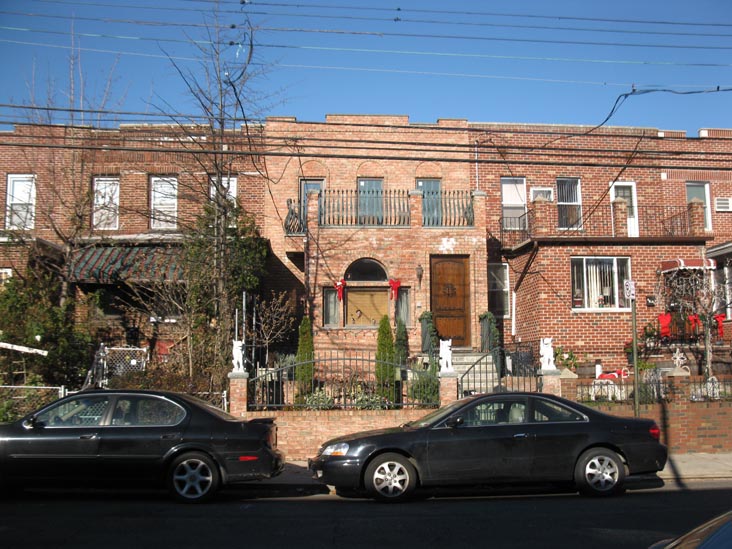
The other type has three floors and a basement:
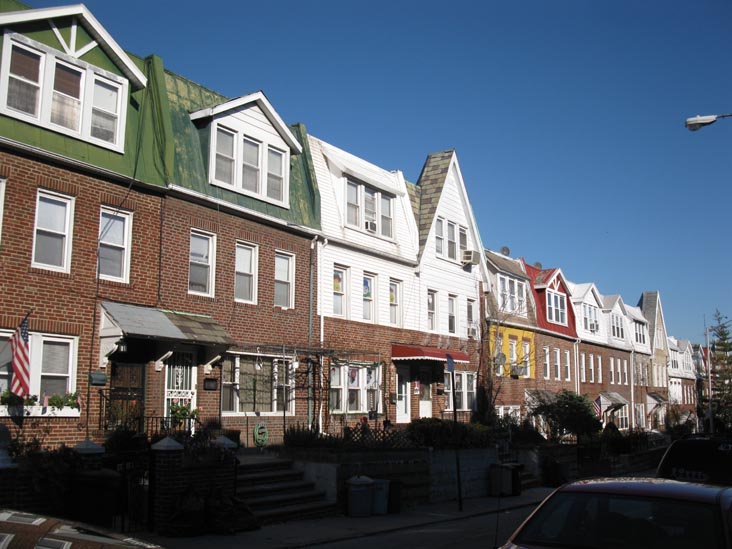
And then there are some that started out as two floors and a basement and were expanded to include a third floor and maybe even the house next door:
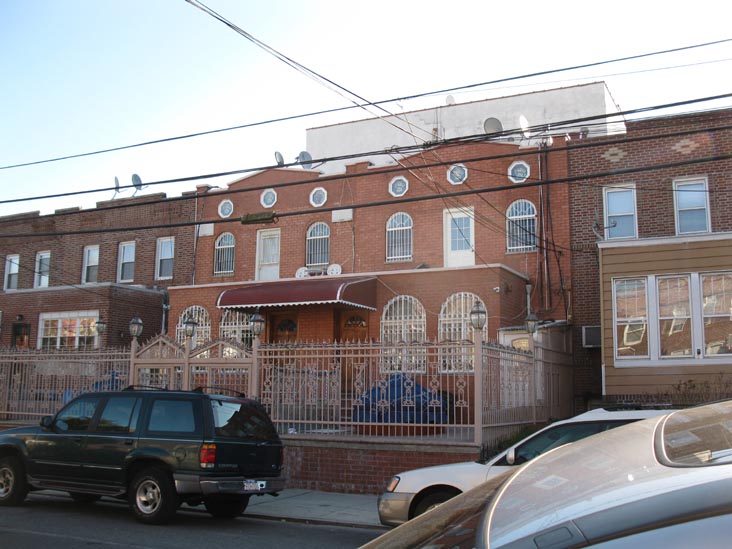
An aside: Every house apparently was built in 1930. If you look at a listing, nine times out of ten they list the year built as 1930. It's as if the entire borough was created in 1930. Cathy, the buyer's representative, told us that there were only a few eras of development in Queens: Nothing was built during the Depression, for obvious reasons, and nothing was built during World War II, for similarly obvious reasons. So I guess that leaves 1930. When in doubt, just say 1930. Now it's possible that there was a lot of construction that took place in 1930. The Astoria Line — i.e., the present-day N/Q train — was opened in 1917, so in some ways it makes sense that major construction would follow, but every single house? I just spent a long detour searching for clues in the nytimes.com archives. First, you have to remember that all of the streets were named something else back then. Here's an example, a Queens map from 1910. The streets were mapped in 1910; we lived on Lathrop Street between Winthrop and Wolcott Avenues. That elevated line ran along Second Avenue, then Debevoise Street. The Beer Garden would have been located west of Debevoise Street on Woolsey Avenue. From there I plugged in the names of the streets and quit looking after awhile because it was taking too long. I think the names of the streets in Queens changed in the very early 1930s, though I'd have to check on that, too.
Back in June, when we were first starting to look at houses, Jen and I saw a three-story house in Astoria that was advertised as a handyman's special. The price was a little outside of the ballpark, or so we thought at the time, but we figured it wouldn't hurt to look, thinking maybe we could perhaps negotiate our way to Jeffrey Maier range, especially if it needed a little work.
The house we looked at was a real fixer upper. Even a piece of shit. It was one of those situations, if memory serves, where one family lived in it for years and never seemed to do anything by way of repairs. The fixtures were ancient. The drop ceiling in the kitchen had fully disengaged a few presidential administrations ago. There was odd Greek graffiti near the staircase on the first floor. The electricity didn't ever seem to be updated. We could go on and on. The sense we got at the time was that fixing up this place would be way above our pay grade. The listing agent guessed that the house needed more than $100,000 worth of work.
By December we decided we wanted to take a second look at the place.
One, it had a perfect setup: The secondary unit was on the third floor — not the basement — and it had a great open layout with lots of light. The primary unit was two floors, which was a lot bigger than anything Jen and I had lived in before.
The idea of the house was perfect for us, and after seeing so many other places, I kept returning to this particular house. We just had to figure out how big a piece of shit it was. I was guessing — hoping against hope, I suppose — that maybe most of the faults with the place were more cosmetic than, say, structural.
As it turned out, the house was still on the market. We contacted the listing agent and asked if we could see it with Michael.
Bad News: The listing agent told us that the house was in contract. Maybe Good News: The listing agent had another house just like it available, only two doors down. It was in much better shape — move-in condition! — though it was listed for $90,000 more, placing it somewhere near the right field upper deck.
We all saw the place on a Thursday evening. It looked like the house two doors down but in a lot better shape — just like the listing agent said. It looked really promising. The only thing was that we couldn't see the top floor apartment — there was a tenant living there — but if we were serious about it, the agent would get in touch with her and get her permission to enter the apartment.
We got back to the agent and told him that we'd like to see the top apartment, too. We scheduled a return visit for noon that Saturday. By 1:30 p.m. we were sitting down at lunch strategizing our starting negotiating point.
After all the places we had seen this house seemed different. For one, it was a place, maybe the first place, we all actually agreed would work. There weren't any lingering questions about physical safety or structural integrity. It was in a neighborhood we all agreed was a "smart investment." There weren't any bizarre quirks like main bathrooms in basements or apartments in basements or anything about the basement other than just a basement. In this case, it featured a relatively nice finished basement. It wasn't like when you applied for a job that you weren't sure you wanted to take or went on a date with someone whom you felt like there was no chemistry with. There was no apparent reason this place wouldn't work. In short, it felt right.
When we travel, I'm the one who has no idea how to haggle. She always tries to get me to play "bad cop" and I always fail her. She'll say something along the lines of, "Oh, this is a nice scarf," and instead of me saying "You don't really need another scarf," I'll say something along the lines of, "Just get it." Because my sense is always that haggling over a few pesos, baht, rupees or dinars is a waste of time. So early on, Jen was determined to keep me far, far away from the negotiating process.
When it came to negotiating a price, I was hesitant to return to the 20 percent game, thinking it absurd. Instead we tried a figure closer to 14 percent. This time Jen called the agent and asked him what he thought about that figure. He counseled us to start out closer to 8.5 percent. Jen asked us what we thought.
Michael had been plugging in numbers and figured that when costs are spread out over thirty years, we could afford to move the fences of our ballpark out some. We decided to follow the agent's advice.
A few minutes later, the agent called us back. We were standing under the elevated train near the Grand Central Parkway. He said that the sellers were countering with 5.5 percent.
"Fuck, dude!" Michael said. Or he said something like that. Maybe I'm penciling in what I was thinking. Suffice it to say, we were happy with this price. After seeing so many places, and seeing enough purchase prices, we were comfortable with the price, and it seemed like a price that indicated that the sellers were serious about selling the house.
Michael thought we should negotiate further. Ten thousand more. Jen and I were hesitant.
"What would it hurt?"
So Jen called the agent back. The sellers countered with five thousand less. We accepted it.
"Fuck, dude, this is totally happening!" Michael said. Or he said something like that. I'm probably penciling in what I was thinking again.
So in December we finally ended our search. We had a house and we would soon be in contract. The agent was going to fax us a binder.
That was the easy part.
Posted: December 13th, 2011 | Author: Scott | Filed under: The Cult Of Domesticity | Tags: Kawama, Overused Baseball Metaphors, Queens Street Names, You Interfere With One Lousy Fly Ball And Suddenly You're A Metaphor For Years To Come
Labor Day came and went, fall intervened, we became busy with the baseball postseason (if you haven't seen this YouTube, it's one of the greatest ever; let it unfold and watch what happens) and before we knew it, we'd done no serious looking for houses. Michael was getting skeptical that it would ever happen. By November, however, we had begun searching online again. A few of the same places were still for sale. Some of the others had been pulled off the market.
Just before Thanksgiving we looked at a two-family house that was in our price range and close to the subway. By this point the sun was setting early in the evening, so we saw it in the dark. The primary unit was OK — my memory of it was that it had a bunch of strange rooms cobbled together and a lot of sewing equipment; it looked kind of like a sweatshop if a sweatshop were run by an older lady from Queens. The secondary unit, on the other hand, was a sight to behold.
If you remember what I wrote about the thrill of spying on people's lives when you are shown a home, and how that thrill quickly dissipates, well for us it was back again. The secondary apartment was on the ground floor, but as the house was built into a hill, it was basically a basement apartment. There were low ceilings, pipes stretching around the walls, "windows" that didn't appear to supply natural light and a makeshift bathroom of some sort that seemed to be held together by clumpy plaster. But the real items of interest were what constituted the tenant's belongings.
As near as we could tell, he was an immigrant vendor of some sort. An inventory of cheap purses was piled in the main room, near a cushion of the type that you might see at a hookah lounge. The contents of the bedroom escape me, but the window treatments seemed to be in a permanent state of drawn. You could see Michael's will start to break.
"I couldn't possibly live in here," Michael whispered as we walked back up the creaky stairs from the lower level. We all got that. He didn't have to say it.
The listing agent, probably sensing that this house wasn't for us, mentioned that he had another house he could show us.
This house was on the same street as the dilapidated Mets house, and would probably be in much better shape. We saw it after Thanksgiving and while none of us were particularly enamored with it, it had all the trappings of a good investment: a garage out back, a location on a nice street and working plumbing. The agent mentioned that there was room to expand, which an investor was considering. It was small, which was the one drawback for us.
"There is another offer," the listing agent told us as we left him. "Just so you know."
We made our offer to the agent. Now, if you go online and look at recommendations for where to begin a negotiation, the common advice is to start 20 percent below listing price and work your way up from there. Twenty percent sounds reasonable if the home is listed for, say, $150,000: $120,000 doesn't sound too ridiculous as a starting number. But at some point, 20 percent might start to sound absurdly low. Maybe not at the upper end, but somewhere between. We were at that absurdly low point.
The listing agent shared our initial offer with the owner, who countered with a number closer to three percent off the listing price. He added that our offer was the lowest offer the owners had ever gotten for the house.
What's more, the listing agent explained, the other offer was in the neighborhood of nine percent off the listing price and that they had 30-40 percent available to put down. Those people were serious enough, he added, to bring a contractor to the house to get a sense of the work that might have to go in to expanding the house.
Further, if we were to raise our offer to match the other one, it would be easy to see where the owner would go: Ten percent for us versus 30-40 percent to the other, it was a no-brainer for the seller. He counseled us to raise our offer to five percent of the listing price.
By this point it was clear to me at least that we were being used as leverage to extract more money from the likely buyer. I had to Google whether this was a legitimate real estate practice, but it was, though I found some interesting discussion about it (here's a more current article about it). And seeing that we were not as crazy about this house, it didn't make sense for us to try to outbid someone else for it. We raised our offer to something still in our ballpark but lower than the other offer supposedly on the table. We never heard anything from them.
I see now online that the house went in contract in February and eventually closed in April for just under three percent off the asking price.
Now this wouldn't all mean much, but the listing agent did happen to mention that his brother had a place that he was selling also in the neighborhood, just a few blocks away. Which just goes to show that it always makes sense to make the effort, just in case one door (literally!) closes and another one (literally!) opens.
Posted: December 11th, 2011 | Author: Scott | Filed under: The Cult Of Domesticity | Tags: Kawama, Overused Baseball Metaphors, Talk Of "Percents" May Be Confusing But Mama Taught Me Not To Be Crass When Writing Blog Posts, The Knockoff Handbag Industry Is Alive And Well, You Didn't Have To Squeeze Me Like You Did But You Did But You Did And I Thank You