One day I'll come to terms with the fact that genre fiction will never be as objectively compelling and unassailably brilliant in the way that I want it to be. In other words, nothing less than transcending its worth as merely a piece of genre fiction. It's kind of a dick thing to want: if only you were what you set out to be and also insanely good, then I'd be practically moved to tears.
In other words, I've been waiting for a "really good sci-fi" book, thinking I'd been open-minded and accepting of the genre when in reality I've just never enjoyed that type of story — leading you to conclude that eventually there's a point where you just should stop torturing yourself.
All of which is to say, there's probably no point in you reading what I thought about Ernest Cline's Ready Player One. That of course won't stop me from writing it, which is itself just torturous.
I will start with this: I don't understand the glowing blurbs on the back of the paperback. I often don't understand the blurbs — or more accurately, I understand what they're saying but rather I have no idea how people lie to themselves that much. Whatever. Blurbs are not new. But stuff like "time simply evaporates" and "ridiculously fun" seem effusive to the point of seeming ironic. Putting aside the tortured mixed metaphor, I just don't like the idea of time evaporating. One of the reasons I'm so leery of reading is the idea that people seem to do it to kill time. Time shouldn't be treated as a puddle.
Since I already said "whatever," I won't say "whatever." So imagine another transition. Got it? OK.
Then there's the world in which Ready takes place. The premise is that governments everywhere relied too heavily on fossil fuels, and by the year 2044, that stash of fossil fuels ran out, I guess leaving the world without energy (except for those locales serviced by nuclear, hydroelectric, solar or wind energy), and somehow the energy industry disappeared, leading to a collapse of society, while at the same time supporting an entire societal infrastructure within some kind of virtual reality system.
Which is how we get to the main conceit of Player, which in short is that the creators of this virtual reality system grew up in the era of early 1980s computer and gaming equipment: Atari, standup video games, etc. And they also love 1980s music. And no one believes that popular culture progressed past 1989.
So one of the creators of this virtual world dies and then creates this sort of virtual reality scavenger hunt, which is what the book is really about. Oh, and most of the clues have to do with 1980s popular culture, because the guy who died lived through this era and conveniently forgot about everything that happened after 1990. Which is to say, no Nirvana, no Outkast, no Judd Apatow, no Seinfeld, no Kanye (NO KANYE???), no Sopranos, no Mad Men, no Wonderbra, no Forrest Gump, no Crash Bandicoot . . . we could go on and on and on. If you pull yourself out of the head of the character and into the head of the writer whose formative years were in the 1980s, you have to ask yourself: was it at all worth it? Obviously — even in spite of the weird "Nifty 50s" sort of nostalgia about that vapid era — the answer is no. Be real, nobody really [hearts] the 80s. Take a look at the Billboard Year-End Hot 100 Singles of 1986, just for example; it's not pretty (full disclosure: 1983, 1984 and even 1985 come off much, much better).
I guess I "get" that when society has broken down to the point where the only meaningful institutions are in the virtual world, a set of origin myths will rise in the vacuum, leading to a completely unwarranted elegies to Men Without Hats, Family Ties and Radio Shack-manufactured computers (TRS-80).
One works best when it disregards the 1980s nostalgia and focuses on the action. The only problem is that when the action is virtual, sometimes it's unclear what's what. I don't remember half of what happened early on or very much at all what took place toward the end. I do know who Howard Jones is, however.
Posted: September 4th, 2015 | Author: Scott | Filed under: Books Are The SUVs Of Writing | Tags: 1980s Nostalgia, Blurbs, Book Club, Oil Depletion, Tandy Corporation
There's a point in Elena Ferrante's My Brilliant Friend, the first in a series of novels about two women from Naples, where the male characters either become huge caricatures or they kind of melt into the background, and you either get why this is or you don't. This bothered Goober, and I noticed it, but it took Jen to knock sense into us: the story is about the friendship between the two women.
I know, a kind of an idiotic thing to say. After all, the book is titled My Brilliant Friend and not These Sort Of Morons That Inhabit Our World And, Oh Yeah, My Brilliant Friend or My Brilliant Friend, Other Friends, And Then The Absent Parents Of All These Friends. I was starting to speculate about what the disconnect could be and circled back to this once, which obviously means it's a brilliant insight: with the exception of men in battle, I wonder if male relationships aren't this intense or big. As soon as I type this it seems absurd, so I don't even want to back it up with any examples. Still, there seemed like a fundamental divide here that seems worth digging into, just unsure where it begins.
This all came into relief when Jen and I watched Unreal and (spoiler alert, even though this happened several weeks ago) in the final scene of the end of the first season when Rachel tells her boss Quinn "I love you." When it happened Jen sort of gasped "yes" while I was like, "what the fuck?" In my mind, Rachel hated her boss, hated the whole milieu and resented being sucked back into it. Jen set me straight: the meaningful relationship on the show had nothing to do with the dudes circling around Rachel but rather this symbiotic professional relationship between Rachel and Quinn. Suffice it to say, I did not perceive that at all, though I appreciated the take.
On the one hand, I'm happy to have my expectations turned upside down — I think most agree that it's one of the goals of good art — but that said, isn't there something a little bit concerning about art that is mostly incomprehensible to people of the opposite sex? And yet that said, I thought I sort of "understood" what Fight Club was "about," but after reading more, clearly I have no fucking clue.
Ultimately, it shouldn't matter. What does matter, as far as Brilliant is concerned, is that it's immediately engaging, provocative in how it punctures the well-trod perception of relationships between females (or brilliant in how it portrays them in a meaningful, true way) and evocative in telling the story of this time and place in Italy (her prose makes you feel the humidity and heat and fear the vermin).
A strange disturbing bit of speculation is that Ferrante is actually a man. It was addressed recently (see here) but the notion is and should remain disturbing: unpacking this notion quickly devolves into something nasty and upsetting and frankly ridiculous: there is no fucking way a man wrote this. And even if one did, civilized society would want to neutralize the psychopath who pulled it of.
The only — only! — legitimate criticism about Friend is the "to be continued" tag at the novel's end. Don't get me wrong — I've read many "to be continued" endings and been disappointed by them, but most are at least somewhat self-contained stories. Hunger Games jumps out at me for some reason: Katniss Everdeen (spoiler alert) wins the Hunger Games in the first book, which is a satisfying enough ending, but they also leave some storylines for the next installment. I'd prefer books/stories to be entirely self-contained, but whatever. The thing is, with My, the ending drops so precipitously and immediately that you're just pissed after finishing the book. This book literally stops mid-scene, which is asinine. There are four books in the Neapolitan Novels. Jen read three out of four and got the fourth in the mail today. She confirmed that the first two have absurd cliffhanging endings. My point: if you want to write a 1600-page novel, by all means, do so. But you can't just stop after 331 pages and start up again. I mean you can if you want, but fuckin' A, dude, seriously?
And the sad thing is that I'm very interested in how the story ends. Just not to the point of committing myself to 1,000 more pages of text.
Posted: September 3rd, 2015 | Author: Scott | Filed under: Books Are The SUVs Of Writing | Tags: Book Club, What Scarface Hath Wrought
In the era of White Privilege it feels sort of weird and wrong to read Beryl Markham's West With the Night, except that between the lion wrassling, thoroughbred traning, and death-defying trans-Atlantic flying you easily get sucked into the mystique and aura of this fuckin' boss lady. Clearly, you could feel completely free to disregard the adventures of a special snowflake in British East Africa, but you'd miss out on a lot of really fuckin' boss badass stories. Also, if it makes you feel any better, she never left Kenya, and in fact died there in the 1980s.
There are, in my mind, a few legitimately weird aspects to West. One, where are the parents? In the early parts of the book, she is hunting big game on her own. Forget helicopter parents, even the most free range or just negligent parent would protect their child against elephants or whatnot. On the other hand, it's sort of an object lesson: if you want your child to set aviation records and tame lions, neglect them.
Then there's the sex, or lack thereof. Maybe we'd love to assume that adventuresome individuals are monomaniacal eunuchs, but that's frankly ridiculous, and only more so when you observe the habits of A-listers: these people bang. If you're flying planes in the bush, people will want to bang you. If you're training racehorses, people will want to bang you. If you're crash landing into Nova Scotia, people will want to bang you. The lack of sex or relationships or anything at all in West is ridiculous, or at the very least noticeable. I can respect that people in a certain day and age didn't talk about stuff, but as a modern reader, it's weird. And if you read her Wikipedia page, it is certainly an omission: this lady had relationships with dukes, airplane pilots and even humped the Little Prince dude.
A word about the dubious provenance of the writing: I don't know if I give a fuck whether she "wrote" "every" "word" "of" "the" "book." And I understand that this is a leap of faith, or at least amounts to taking a definite side between "it's great, brilliant" and "it's full of shit and fraudulent." I was going to say something along the lines of, "The fact that Wilt Chamberlain used a ghost writer doesn't negate the 20,000 women he bedded" except that apparently he didn't use a ghost writer or a co-writer or anything of the sort. But you get my point. As for what I think after having read it, this kind of sealed it for me.
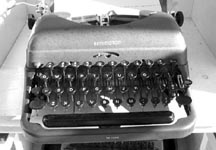
All that aside, look, the writing in West is great: taut, clean, crisp in a way that lets the yarns speak for themselves. I can't believe her voice isn't in there somewhere. And it's especially crazy in this time, where authorship is as ephemeral as a Drake-Meek Mill feud, that people are fucked up about it. That said, I so badly wanted her to have hunkered down over a Remington and pecked away at this bit of brilliance. Even so, she still a) battled lions, b) trained racehorses, c) flew across the Atlantic, and d) whatever else she did that was awesome; wanting her to be articulate to the point of lyrical about the whole thing is asking a lot. Also, using "inauthentic" as a criticism is too easy and too cheap; boss people don't need to write their own stories because writing your own story is lame and beneath totally awesome people (Wilt Chamberlain aside).
Posted: August 31st, 2015 | Author: Scott | Filed under: Books Are The SUVs Of Writing | Tags: Book Club, Early Pionerers Of Aviation, White Privilege, Wilt Chamberlain